|
Blood-Compatible Nanoscale Materials Possible Using Heparin
TROY, N.Y. — Researchers from Rensselaer Polytechnic
Institute have engineered nanoscale materials that are blood
compatible using heparin, an anticoagulant. The heparin
biomaterials have potential for use as medical devices and in
medical treatments such as kidney dialysis.

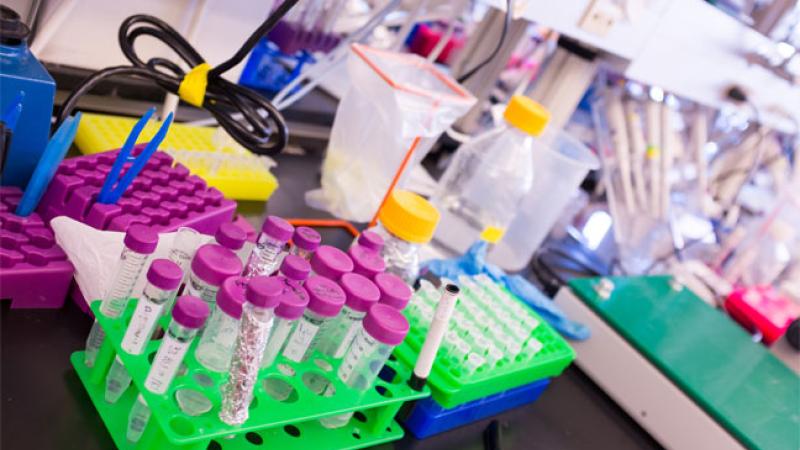
Photo by Rensselaer/Robert
Linhardt |
The researchers prepared several materials with heparin
composites or coatings, including carbon nanotubes, nanofibers,
and membranes with nanosized pores, and then demonstrated the
materials’ high compatibility with blood. Heparin is a common
therapeutic used to maintain blood flow or prevent clotting
during medical procedures and treatments.
The researchers demonstrated the composite heparin membrane
with nanopores could work as an artificial kidney, or dialyzer,
by filtering the blood and maintaining its flow. The presence
of this blood-compatible dialyzer could potentially eliminate
the need for systemic administration of heparin to the patient
during kidney dialysis, the researchers say.
The heparin-coated membranes are described in a paper titled
“Ionic Liquid-Derived Blood Compatible Membranes for Kidney
Dialysis,” published online Apr. 24 in advance of print in the
Journal of Biomedical Materials Research.
“These heparin composite membranes and fibers and coated
carbon nanotubes are an enabling technology,” says Saravanababu
Murugesan, a recent doctoral graduate in chemical and
biological engineering at Rensselaer and lead author of the
paper. “Our results show these novel materials have great
promise in the development of improved medical devices that are
blood compatible.”
The research team is led by Robert Linhardt, the
Ann and John H. Broadbent Jr. ’59 Senior Constellation
Professor of Biocatalysis and Metabolic Engineering at
Rensselaer, and includes collaboration with Pulickel Ajayan,
the Henry Burlage Professor of Materials Science and
Engineering, and Omkaram “Om” Nalamasu, professor of materials
science and engineering, at Rensselaer. Additional co-authors
of the paper are Shaker Mousa, director of the Pharmaceutical
Research Institute at Albany College of Pharmacy, and Aravind
Vijayaraghavan, a recent doctoral graduate in materials science
and engineering at Rensselaer. Funding for this research was
provided by the National Institutes of Health.
Recent results related to this work have been published
online in the journals Langmuir (“Blood Compatible
Nanotubes — Nano-based Neoproteoglycans,” Mar. 11, 2006) and
Biomacromolecules (“Preparation of Biopolymer Fibers
by Electrospinning from Room Temperature Ionic Liquids,” Jan.
26, 2006). Provisional patents have been filed by Rensselaer
Polytechnic Institute.
Research in Linhardt’s group at the Center for Biotechnology
and Interdisciplinary Studies at Rensselaer focuses on complex
carbohydrates such as heparin. After determining the structure
of these molecules, researchers study their biological
activities to establish a structure-activity relationship that
may reveal lead compounds for new drug development. Recent
discoveries include a synthetic method for preparation of
heparin in quantities large enough for use in medical
treatment.
Biotechnology and Interdisciplinary Studies at
Rensselaer
At Rensselaer, faculty and students in diverse
academic and research disciplines are collaborating at the
intersection of the life sciences, the physical sciences, and
engineering to encourage discovery and innovation. Rensselaer’s
four biotechnology research constellations - biocatalysis and
metabolic engineering, functional tissue engineering and
regenerative medicine, biocomputation and bioinformatics, and
integrative systems biology - engage a multidisciplinary mix of
faculty and students focused on the application of engineering
and physical and information sciences to the life sciences.
Ranked among the world’s most advanced research facilities, the
Center
for Biotechnology and Interdisciplinary Studies at
Rensselaer provides a state-of-the-art platform for
collaborative research and world-class programs and
symposia.
|
Published
May 4,
2006 |
Contact: Tiffany Lohwater
Phone: (518) 276-6542
E-mail: lohwat@rpi.edu |
|