|
Machine Learning Could Speed Up Radiation Therapy for Cancer Patients
Troy, N.Y. — A new computer-based technique could eliminate
hours of manual adjustment associated with a popular cancer
treatment. In a paper published in the Feb. 7 issue of
Physics in Medicine and Biology, researchers from
Rensselaer Polytechnic Institute describe an approach that has
the potential to automatically determine acceptable radiation
plans in a matter of minutes, without compromising the quality
of treatment.
“Intensity Modulated Radiation Therapy (IMRT) has exploded
in popularity, but the technique can require hours of manual
tuning to determine an effective radiation treatment for a
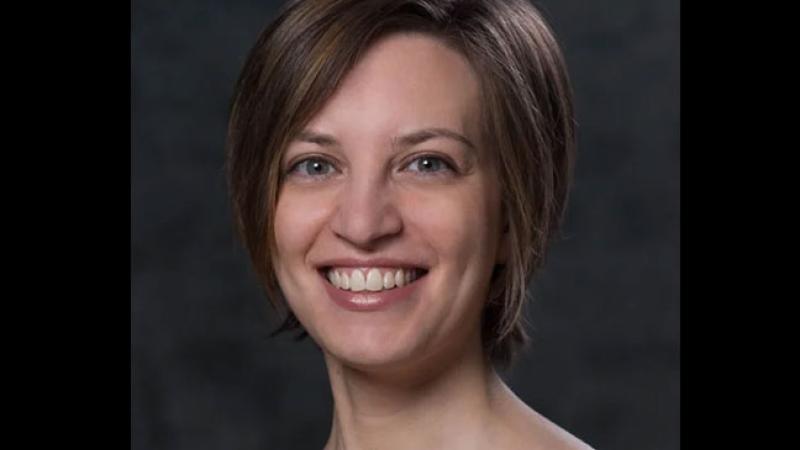
given patient,” said Richard Radke, assistant professor of
electrical, computer, and systems engineering at Rensselaer.
Radke is leading a team of engineers and medical physicists to
develop a “machine learning” algorithm that could cut hours
from the process.
A subfield of artificial intelligence, machine learning is
based on the development of algorithms that allow computers to
learn relationships in large datasets from examples. Radke and
his coworkers have tested their algorithm on 10 prostate cancer
patients. They found that for 70 percent of the cases, the
algorithm automatically determined an appropriate radiation
therapy plan in about 10 minutes.
“The main goal of radiation therapy is to irradiate a tumor
with a very high dose, while avoiding all of the healthy
organs,” Radke said. He described early versions of radiation
therapy as a “fire hose” approach, applying a uniform stream of
particles to overwhelm cancer cells with radiation.
IMRT adds nuance and flexibility to radiation therapy,
increasing the likelihood of treating a tumor without
endangering surrounding healthy tissue. Each IMRT beam is
composed of thousands of tiny “beamlets” that can be
individually modulated to deliver the right level of radiation
precisely where it is needed.
But the semi-automatic process of developing a treatment
plan can be extremely time-consuming — up to about four hours
for prostate cancer and up to an entire day for more
complicated cancers in the head and neck, according to
Radke.
A radiation planner must perform a CT scan, analyze the
image to determine the exact locations of the tumor and healthy
tissues, and define the radiation levels that each area should
receive. Then the planner must give weight to various
constraints set by a doctor, such as allowing no more than a
certain level of radiation to hit a nearby organ, while
assuring that the tumor receives enough to kill the cancerous
cells.
This is currently achieved by manually determining the
settings of up to 20 different parameters, or “knobs,” deriving
the corresponding radiation plan, and then repeating the
process if the plan does not meet the clinical constraints.
“Our goal is to automate this knob-turning process, saving the
planner’s time by removing decisions that don’t require their
expert intuition,” said Radke.
The researchers first performed a sensitivity analysis,
which showed that many of the parameters could be eliminated
completely because they had little effect on the outcome of the
treatment. They then showed that an automatic search over the
smaller set of sensitive parameters could theoretically lead to
clinically acceptable plans.
The procedure was put to the test by developing radiation
plans for 10 patients with prostate cancer. In all 10 cases the
process took between five and 10 minutes, Radke said. Four
cases would have been immediately acceptable in the clinic;
three needed only minor “tweaking” by an expert to achieve an
acceptable radiation plan; and three would have demanded more
attention from a radiation planner.
Radke and his coworkers plan to develop a more robust
prototype that can be installed on hospital computers and
evaluated in a clinical setting. He hopes to see a clinical
prototype in the next few years. The researchers also plan to
test the approach on tumors that are more difficult to treat
with radiation therapy, such as head and neck cancers.
In a related project, Radke is collaborating with colleagues
at Boston’s Massachusetts General Hospital to create computer
vision algorithms that offer accurate estimates of the
locations of tumors. This automatic modeling and segmentation
process could help radiation planning at an earlier stage by
automatically outlining organs of interest in each image of a
CT scan, which is another time-consuming manual step. Learn
more about this project here: http://news.rpi.edu/update.do?artcenterkey=134.
The research is supported by the National Cancer Institute
and the Center for Subsurface Sensing and Imaging Systems
(CenSSIS) at Rensselaer, which is funded by the National
Science Foundation. Renzhi Lu, a graduate student in electrical
engineering at Rensselaer, also contributed to the
research.
|
Published
February 7,
2007 |
Contact: Jason Gorss
Phone: (518) 276-6098
E-mail: gorssj@rpi.edu |
|