|
Freight Management in Manhattan: Tax Incentives and High-Tech Tools for Night Owls
Researchers win $1.2M DOT grant to develop methods
for shifting truck deliveries to off-hours
Troy, N.Y. — Researchers at Rensselaer Polytechnic Institute
have won a competitive $1.2 million grant from the U.S.
Department of Transportation to identify the perfect
combination of technology and financial incentives that could
help alleviate daytime traffic congestion and boost economic
growth in New York City.
When fully deployed, the program — the first of its kind in
the world — is expected to reduce daytime truck deliveries in
Manhattan by up to 20 percent in certain industry segments by
shifting a portion of those deliveries to off-hours.
The transition will help reduce congestion on city streets
and in turn improve environmental conditions by trimming
automotive emissions. The move could also increase the
competitiveness of participating New York businesses by
offering tax incentives to those willing to accept off-hour
deliveries. Plus, with fewer trucks on the road, it will be
easier and faster for customers to visit downtown businesses,
the researchers predict.
The two-year project, titled “Integrative Freight Demand
Management in the New York City Metropolitan Area,” brings
together an influential group of partners from government,
academia, small business, and large corporations under the
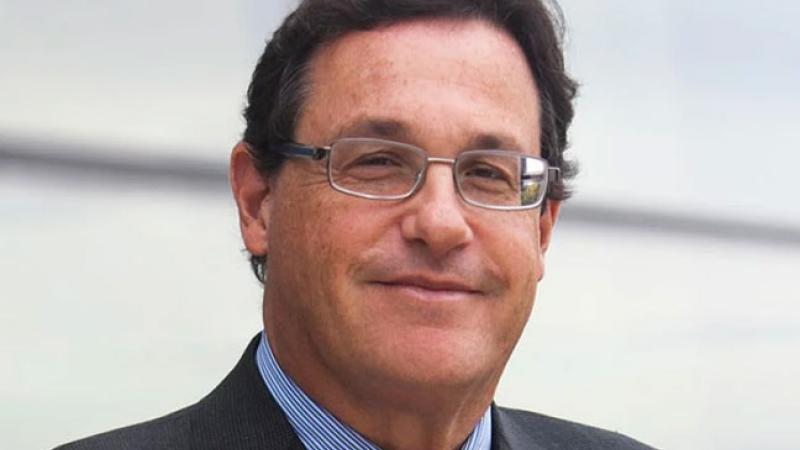
leadership of Jose Holguín-Veras, a world-renowned expert in
freight transportation systems and professor in Rensselaer’s
Department of Civil and Environmental Engineering, and network
modeling expert Satish Ukkusuri, assistant professor of civil
and environmental engineering.
Holguín-Veras and his team are looking to tackle the problem
of urban congestion from the perspectives of technology,
policy, and economics.
The delivery industry is extremely competitive, which makes
trucking companies unable to unilaterally change their delivery
times. Their customers — those businesses receiving packages —
have a considerable say in when deliveries are made. Likewise,
competition in the delivery industry renders trucking companies
unable to pass on toll costs to customers. This puts delivery
companies in the precarious position of absorbing any toll
increases and suffering lower profits, or having to raise
prices to reflect the toll increases and risk losing
customers.
Holguín-Veras’ research shows that after the Port Authority
of New York and New Jersey increased tolls in 2001, only 9
percent of trucking companies passed on the increased costs to
customers. This low number reflects the industry’s weak
bargaining position, he said. The problem, Holguín-Veras
suggests, is that if trucking companies cannot pass the tolls
to their customers for fear of losing business, the customers
do not have any incentive to receive off-hour deliveries. As a
result, the only impact of increasing tolls is to eat away the
truckers’ profits, with no real impact on traffic
congestion.
Trucking companies are stuck between a rock and a hard
place, Holguín-Veras said, and the current policies based on
increasing tolls to trucks — in the hope that higher costs will
prompt the drivers to shift some deliveries to the off-hours —
will not do the trick, as they stand only to further penalize
the delivery industry.
Instead, with this new project, he is proposing a set of
comprehensive policies that target both the delivery companies
and their customers. Receivers willing to accept off-hour
deliveries will benefit from economic incentives that may be
funded from so-called “time of day” or another, yet-to-be
determined mechanism.
Holguín-Veras said his team will conduct extensive polling
to determine how economic incentives — most likely in the form
of tax breaks — can help persuade business owners to volunteer
to begin accepting off-hours deliveries. He sees no downside to
this system, since the proposed approach relies on voluntary
participation of businesses that receive packages.
At the same time, the research team will outfit delivery
truck drivers with “smart” cellular phones that feature
satellite global positioning system (GPS) technology. Data
collected from these devices, which can provide drivers with
real-time traffic information and real-time suggestions for
avoiding congestion and optimizing routes, would be shared with
delivery firms, enabling them to do dynamic fleet management at
a fraction of the cost of alternative systems currently
available.
Data collected from the smart phones would also allow
Holguín-Veras and city officials to ensure delivery companies
are complying with the program. Researchers also will use this
dynamic data to create freight transportation models as well as
network traffic simulation.
“In one shot, the proposed approach is expected to improve
traffic conditions, reduce the environmental externalities
associated with truck traffic which would bring about health
improvements, and, more importantly, increase the economic
competitiveness of the core of the urban areas by virtue of the
tax deductions,” Holguín-Veras said. “We do not need to move
the operations of all businesses to the off-hours, we only need
to move some of them to produce a noticeable improvement in
traffic conditions and environmental sustainability.”
Holguín-Veras said the project, if successful, could serve
as an example for similar programs implemented to help fight
traffic congestion in cities around the world. In general, the
cost of off-hour deliveries is almost 30 percent lower than
during the congested daytime hours, thanks to quicker travel
times and more available parking, which result in overall
higher productivity.
“This project has the potential to become a showcase of what
could be achieved by integrating cutting-edge freight
management transportation research, technology, traffic
simulation, and policy around the objective of improving urban
traffic conditions in the largest and most complex urban system
in the nation,” Holguín-Veras. “If it works in New York City,
it will work anywhere.”
The research team will spend a year to 18 months conducting
surveys, collecting data, creating models, and running
simulations. Afterward, they will launch a pilot program that
includes up to 300 businesses from a particular sector,
probably the restaurant sector, and up to 50 carriers, who will
be outfit with the smart phones and begin shifting some of
their deliveries to off-peak hours.
If the pilot program is successful and the freight
management system is adopted on a wide scale, it could result
in dramatic improvement in daytime traffic conditions,
according to Holguín-Veras. In Manhattan alone, there are more
than 6,000 restaurants, each of which receives an average of
six or seven daily deliveries — for a combined total of more
truck trips than those produced by the Port of New York and New
Jersey.
“Even shifting one out of 10 or one out of five of these
deliveries to off-peak hours will make a substantial
difference,” said Ukkusuri, who is leading Rensselaer’s traffic
simulation efforts. Both Ukkusuri and Holguín-Veras are members
of Rensselaer’s Transportation Systems Group.
Under Holguin-Veras’ leadership, Rensselaer will partner
with Professor Kaan Ozbay from Rutgers University, Allison de
Cerreño, director of New York University’s Rudin Center for
Transportation Policy and Management, and Alain Kornhauser from
Princeton, N.J.-based ALK Technologies Inc. to tackle the
project. As part of the project, a business advisory group
comprising leading business and trade organizations and agency
advisory groups with representatives of the key transportation
agencies will provide input to the project.
The project is funded by the U.S. Department of
Transportation.
About Rensselaer’s Transportation Systems
Group
The Transportation Systems Group at RPI is one of the
top transportation programs in the nation with an ongoing
mission of conducting world class research in transportation;
educating the next generation of transportation professionals;
and serving the community by responding to the transportation
needs of New York. This is accomplished by three outstanding
faculty and a strong graduate program comprising of students
from U.S. and other parts of the world. This program is funded
by the National Science Foundation, U.S. Department of
Transportation, New York State Department of Transportation and
many other state transportation agencies.
|
Published
October 9,
2007 |
Contact: Michael Mullaney
Phone: (518) 276-6161
E-mail: mullam@rpi.edu |
|