|
Using Supercomputers To Make Safer Nuclear Reactors
Rensselaer researcher will lead $3 million DoE study
to improve safety of tomorrow’s reactors
Troy, N.Y. — Rensselaer Polytechnic Institute is leading a
$3 million research project that will pair two of the world’s
most powerful supercomputers to boost the safety and
reliability of next-generation nuclear power reactors.
The three-year project, funded by the U.S. Department of
Energy, will call upon a diverse team of researchers and
institutions to create highly detailed computer models of a new
proposed type of nuclear reactor. These models could play a key
role for the future development of the new reactors, which meet
stringent safety and nonproliferation criteria, can burn
long-lived and highly radioactive materials, and can operate
over a long time without using new fuel.
Watch
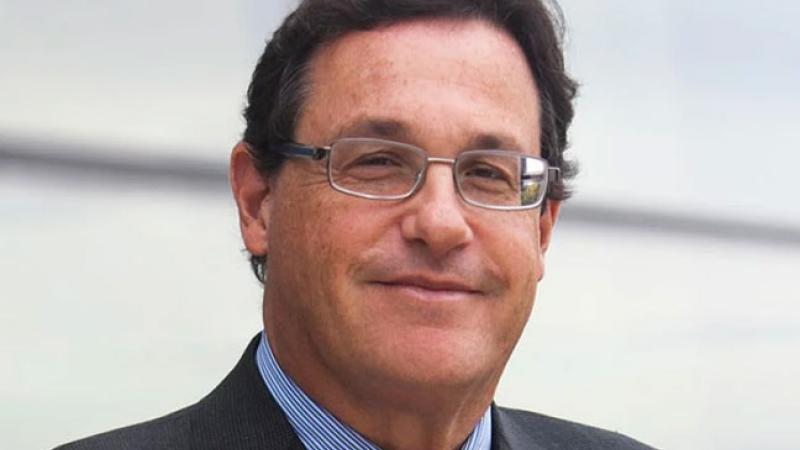
an interview with engineering physics professor
Michael Podowski, a world-renowned nuclear engineering
and multiphase science and technology expert, who is
project director and principal investigator of the new
study.
|
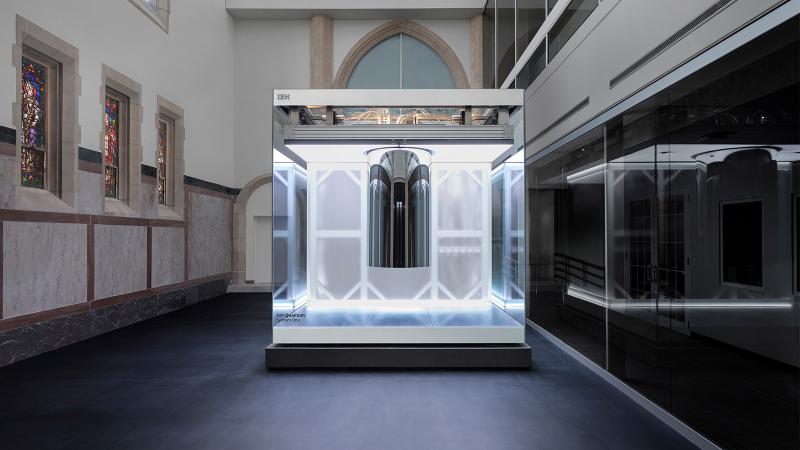
Running simulations of such a vast virtual model, where
scientists can watch the reactor system perform as a whole or
zoom in to focus on the interaction of individual molecules,
requires unprecedented computing power. To undertake such a
task, researchers will use both Rensselaer’s Computational
Center for Nanotechnology Innovations, or CCNI — the world’s
seventh most powerful supercomputer — and Brookhaven National
Laboratory’s New York Blue — the world’s fifth most powerful
supercomputer.
The research program, titled “Deployment of a Suite of High
Performance Computational Tools for Multiscale Multiphysics
Simulation of Generation-IV Reactors,” is unique in scale as
well as its geographic concentration. Along with Rensselaer and
Brookhaven, the partnership includes researchers from Columbia
University and the State University of New York at Stony Brook,
all New York state-based institutions. Another Empire State
connection is computer giant IBM, headquartered in New York and
the maker of Blue Gene supercomputers. The company developed,
designed, and built both CCNI and New York Blue.
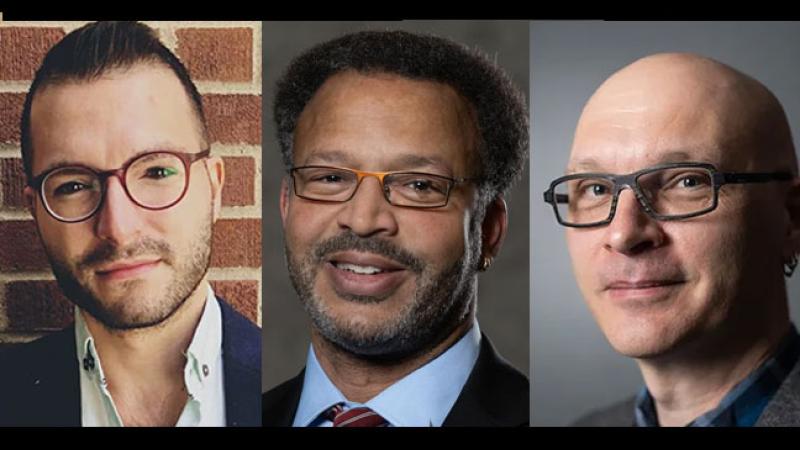
Rensselaer nuclear engineering and engineering physics
professor Michael Podowski, a world-renowned nuclear
engineering and multiphase science and technology expert who
also heads Rensselaer’s Interdisciplinary Center for Multiphase
Research, is project director and principal investigator of the
new study.
Podowski said nuclear power should likely gain traction and
become more widespread in the coming decades, as nations seek
ways to fulfill their growing energy needs without increasing
their greenhouse emissions. Nuclear reactors produce no carbon
dioxide, Podowski said, which gives this energy source an
advantage over coal and other fossil fuels for large-scale
electricity production.
The main challenge of nuclear power plants, he said, is that
they produce radioactive waste as a byproduct of energy
production. But several governments around the world, including
the United States, are working tirelessly with universities,
research consortia, and the private sector to design and
develop new, so-called “fourth generation” nuclear reactors
that are safer and produce less waste. These reactors will be
necessary in the coming decades as nuclear reactors currently
in use reach the end of their life cycle and are gradually
decommissioned.
The type of reactor that Podowski’s team will be modeling, a
sodium-cooled fast reactor, or SFR, is among the most promising
of these next-generation designs. The primary advantage of the
SFR is its ability to burn highly radioactive nuclear
materials, which today’s reactors cannot do, Podowski
said.
Whereas current reactors source their power from uranium,
SFRs can also source their power from fuel that is a mixture of
uranium and plutonium. In particular, SFRs will be able to burn
both weapons-grade plutonium and pre-existing nuclear waste,
Podowski said. Thanks to their high temperatures, SFRs will
also produce electricity at higher efficiency than current
nuclear reactors.
So along with producing less toxic waste, SFRs should be
able to actively help reduce the amount of existing radioactive
materials by burning already-spent nuclear waste, he said. SFRs
also offer a viable, productive way to start getting rid of the
world’s stockpile of weapons-grade nuclear fuel.
“The idea is to design reactors that can use this material
and that are safe,” Podowski said. “With this project, we are
trying to improve the understanding of the physics of the
system in order to provide the necessary advancements for the
design of new, safer, and better reactors.”
To expedite this understanding, Podowski’s team will
construct an incredibly detailed computer model of an SFR. The
model will allow researchers to zoom in and watch as individual
molecules of fission gas and fuel material interact with other
molecules inside the reactor, or zoom out to simulate and test
the behavior of the reactor as a whole. Creating such a model,
not to mention running hundreds or thousands of simulations
with slightly modified models and conditions, requires a
tremendous amount of computing power and would not be possible
without the help of supercomputers, Podowski said.
In order to construct the model and run these massive
simulations, Podowski’s team will develop and deploy a suite of
powerful, high-performance software tools capable of performing
such a task. Since no one computer code or technology is robust
enough to model the wide variety of systems that comprise an
SFR, the team will use different computer codes for different
parts of the model and then develop new ways of linking those
differently coded segments together into a single, cohesive,
seamless package.
The researchers will use simulations to study fuel
performance, local core degradation, fuel particle transport,
and several other aspects of the SFRs. By better understanding
how design and operational issues will affect the reactor at
different stages in its life cycle, Podowski said, the new
study will help to dramatically improve the design and safety
of SFRs long before the first physical prototype is ever
built.
“Nuclear reactors are safe, but nothing is perfect,”
Podowski said. “So the issue is to anticipate what could
happen, understand how it could happen, and then take actions
to both prevent it from happening and, in the extremely
unlikely instance of an accident, be able to mitigate the
consequences.”
Podowski will lead a team of more than 10 researchers on the
three-year project. Rensselaer associate professor Kenneth
Jansen, assistant professor Li Liu, and research assistant
professor Steven Antal — all of the Department of Mechanical,
Aerospace, and Nuclear Engineering — are listed as co-PIs and
will contribute to the study. Podowski said he also expects to
hire a postdoctoral researcher and at least three doctoral
students to work on the project.
The rest of the team includes James Glimm from Stony Brook
University; David Keyes from Columbia University; as well as
Lap Cheng and Roman Samulyak from Brookhaven National
Laboratory.
|
Published
November 1,
2007 |
Contact: Michael Mullaney
Phone: (518) 276-6161
E-mail: mullam@rpi.edu |
|