|
U.S. Army Corps of Engineers Honors Rensselaer Researchers for Work on New Orleans Levee Modeling
Troy, N.Y. — The U.S. Army Corps of Engineers bestowed high
honors upon a team of Rensselaer Polytechnic Institute faculty
and staff for their critical contributions to the rebuilding of
New Orleans levees ravaged by Hurricane Katrina.
A small-scale centrifuge model of the
17th Street Canal in New Orleans indicates that this
levee may have slid on a layer of weak clay just beneath
the peat that underlies the earthen structure.
See video (wmv).
|
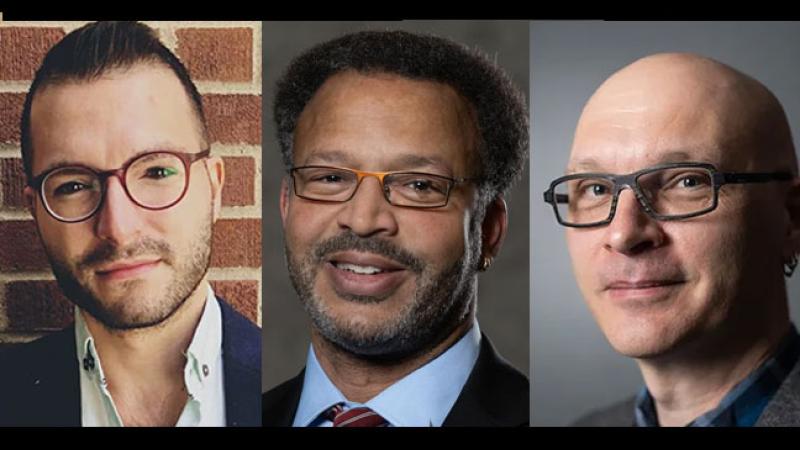
The group, led by professors Tarek Abdoun, Thomas Zimmie,
and Ricardo Dobry, of Rensselaer’s Center for Earthquake
Engineering Simulation (CEES) in the School of Engineering,
received an assortment of awards, including the coveted
Commander’s Award for Public Service, and certificates from the
Corps and its Hurricane Katrina Interagency Performance
Evaluation Task Force (IPET). The awards were presented in a
Nov. 28 ceremony in Rensselaer’s Jonsson Engineering
Center.
“The independent centrifuge modeling experiments conducted
by the experts at Rensselaer greatly assisted with the repairs
and improvements of the New Orleans hurricane protection system
following Hurricane Katrina,” said Mike Sharp, co-leader of the
IPET Geotechnical Structure Performance Analysis Team, who
presented the awards at the ceremony. “The Rensselaer
centrifuge experiments, coupled with those conducted by the
U.S. Army Corps of Engineers, discovered and validated
floodwall failure mechanisms. These ‘lessons learned’ were
factored into the system improvements to provide much better
protection for the citizens of New Orleans.”
“These prestigious awards from the Army Corps of Engineers
are well deserved and well received,” said Alan Cramb, dean of
Rensselaer’s School of Engineering. “The persistent and careful
research conducted by Professors Abdoun, Zimmie, Dobry, and
their team demonstrates the very best Rensselaer has to offer.
They are problem solvers, creative thinkers, and their efforts
in this project will inform engineers for generations to
come.”
To provide essential data for the rebuilding of the
devastated levees in New Orleans, Abdoun, Zimmie, Dobry and
their group studied small-scale models of sections of the
flood-protection system. The researchers built models of
typical levee sections from several locations in New Orleans,
including the 17th Street Canal and the London Avenue Canal,
and tested these models using Rensselaer’s 150 g-ton
centrifuge. The group replicated conditions during Hurricane
Katrina and subjected the models to flood loads, supplying
important information to help the U.S. Army Corps of Engineers
prepare the city for the next hurricane season and beyond.
“It’s a great honor to be awarded the prestigious
Commander’s Medal for my effort on studying New Orleans
levees,” said Abdoun, an associate professor in Rensselaer’s
Department of Civil and Environmental Engineering. “More
important is the fact that our findings led to significant
improvements of the New Orleans hurricane protection system
following Hurricane Katrina.”
Preliminary findings of the study show that in the 17th
Street model, the wall in the middle of the earthen structure
started to move before the water reached the top. The weak clay
directly underneath the peat layer sheared first, causing the
whole levee to slide. Abdoun presented the findings to peer
review groups from the American Society of Civil Engineers and
the National Academy of Engineering. Zimmie, a professor in the
same department, also spent a week in New Orleans as part of a
National Science Foundation investigation team and presented
his findings to the U.S. Senate Committee on Environment and
Public Works.
“Hopefully our work has led to a clearer understanding of
what happened in Katrina, and results in improved protection
against future disasters in New Orleans and around the globe,”
Zimmie said. “The emphasis over the past two years has been New
Orleans, but there are thousands of miles of levees throughout
the United States that can benefit from our research.”
The complete list of award recipients is as follows:
Tarek Abdoun, an associate professor in
Rensselaer’s Department of Civil and Environmental Engineering,
will receive the Commander’s Award for Public Service with an
accompanying medal from the U.S. Army Corps of Engineers. This
medal is one of the highest awards given by the Army to
civilians and is reserved for individuals who provided
outstanding services to the Army. The award is in appreciation
for Abdoun’s support in the New Orleans recovery through
efforts with IPET. Abdoun will also receive a Certificate of
Recognition from IPET, for his leadership and dedication
provided to the organization’s post-Katrina projects.
Tom Zimmie, a professor in Rensselaer’s
Department of Civil and Environmental Engineering, will receive
a Certificate of Appreciation for Patriotic Civilian Service
from the U.S. Army Corps of Engineers. The award is in
appreciation for his support in the New Orleans recovery
through efforts with IPET. From IPET, Zimmie will also receive
a Certificate of Recognition, recognizing his leadership and
dedication applied to the IPET effort.
Ricardo Dobry, Institute Professor in
Rensselaer’s Department of Civil and Environmental Engineering,
will receive a Certificate of Recognition for leadership and
dedication provided to the IPET effort.
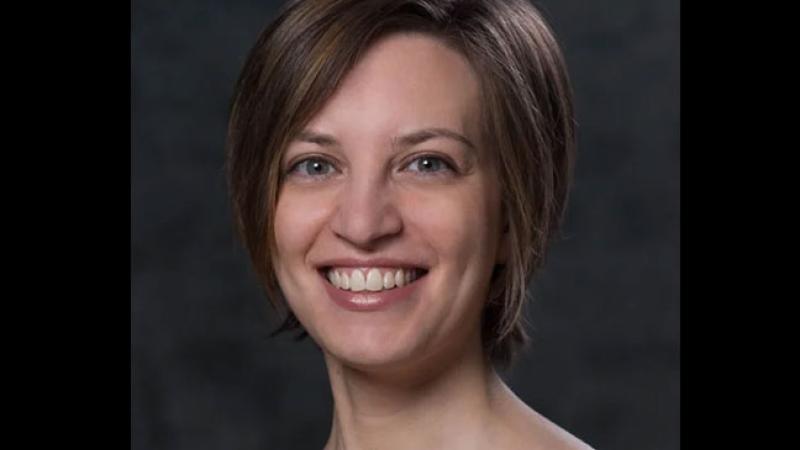
Inthuorn Sasanakul, operations manager of
Rensselaer’s Center for Earthquake Engineering Simulation, will
receive the Commander’s Award for Public Service with an
accompanying medal from the U.S. Army Corps of Engineers. This
medal is one of the highest awards given by the Army to
civilians and is reserved for individuals who provided
outstanding services to the Army. The award is in appreciation
for Sasanakul’s support in the New Orleans recovery through
efforts with IPET. Sasanakul will also receive a Certificate of
Recognition from IPET, recognizing the leadership and
dedication in the organization’s post-Katrina projects.
Javier Ubilla, a research engineer at
Rensselaer’s Center for Earthquake Engineering Simulation, will
receive the Commander’s Award for Public Service with an
accompanying medal from the U.S. Army Corps of Engineers. This
medal is one of the highest awards given by the Army to
civilians and is reserved for individuals who provided
outstanding services to the Army. The award is in appreciation
for Ubilla’s support in the New Orleans recovery through
efforts with IPET. Ubilla will also receive a Certificate of
Recognition from IPET, recognizing his leadership and
dedication provided to the organization’s post-Katrina
projects.
Hassan Radwan, IT Manager of Rensselaer’s
Center for Earthquake Engineering Simulation, and
Marcelo Gonzales, a doctoral student in the
Rensselaer’s Department of Civil and Environmental Engineering,
will each receive a Certificate of Appreciation for Patriotic
Civilian Service from the U.S. Army Corps of Engineers in
appreciation for their support of the New Orleans recovery
through efforts with IPET. From IPET, Radwan and Gonzales also
will receive a Certificate of Recognition, recognizing their
leadership and dedication applied to the IPET effort.
Rensselaer’s Center for Earthquake Engineering Simulation
(CEES) is part of a national network of universities supported
by the National Science Foundation, which includes critical
research facilities for analyzing and mitigating the effects of
earthquakes and other natural and man-made hazards on the
country’s civil infrastructure.
|
Published
November 28,
2007 |
Contact: Michael Mullaney
Phone: (518) 276-6161
E-mail: mullam@rpi.edu |
|