Bringing Second Life To Life: Researchers Create Character With Reasoning Abilities of a Child
Video Clip: False Belief in Second
Life
(MOV)
(WMV)
|
Troy, N.Y. — Today’s video games and online virtual worlds
give users the freedom to create characters in the digital
domain that look and seem more human than ever before. But
despite having your hair, your height, and your hazel eyes,
your avatar is still little more than just a pretty face.
A group of researchers from Rensselaer Polytechnic Institute
is working to change that by engineering characters with the
capacity to have beliefs and to reason about the beliefs of
others. The characters will be able to predict and manipulate
the behavior of even human players, with whom they will
directly interact in the real, physical world, according to the
team.
At a recent conference on artificial intelligence, the
researchers unveiled the “embodiment” of their success to date:
“Eddie,” a 4-year-old child in Second Life who can
reason about his own beliefs to draw conclusions in a manner
that matches human children his age.
“Current avatars in massively multiplayer online worlds —
such as Second Life — are directly tethered to a
user’s keystrokes and only give the illusion of mentality,”
said Selmer Bringsjord, head of Rensselaer’s Cognitive Science
Department and leader of the research project. “Truly
convincing autonomous synthetic characters must possess
memories; believe things, want things, remember things.”
Such characters can only be engineered by coupling
logic-based artificial intelligence and computational cognitive
modeling techniques with the processing power of a
supercomputer, according to Bringsjord.
The principles and techniques that humans deploy in order to
understand, predict, and manipulate the behavior of other
humans is collectively referred to as a “theory of mind.”
Bringsjord’s research group is now starting to engineer part of
that theory, which would allow artificial agents to understand,
predict, and manipulate the behavior of other agents, in order
to be genuine stand-ins for human beings or autonomous
intellects in their own right.
The logico-mathematical theory will include rigorous,
declarative definitions of all of the concepts central to a
theory of the mind, including lying, betrayal, and even evil,
according to Bringsjord.
To test “Eddie’s” reasoning powers, the group created a demo
in Second Life that subjected their theory to a
false-belief test.
In a typical real-life version of this test, a child
witnesses a series of events in which Person A places an object
(such as a teddy bear) in a certain location (such as a
cabinet). Person A then leaves the room, and during his absence
Person B moves the object to a new location (such as the
refrigerator). The child is then asked to predict where Person
A will look for the object when he gets back.
The right answer, of course, is the cabinet, but children
age 4 and under will generally say the refrigerator because
they haven’t yet formed a theory of the mind of
others.
The researchers recreated the same situation in Second
Life, using an automated theorem prover coupled with
procedures for converting conversational English in Second
Life into formal logic, the native language of the
prover.
When the code is executed, the software simulates keystrokes
in Second Life. This enables control of “Eddie,” who
demonstrates an incorrect prediction of where Person A will
look for the teddy bear — a response consistent with that of a
4-year old child. But, in an instant, Eddie’s mind can be
improved, and if the test is run again, he makes the correct
prediction.
A video clip of the “False Belief in Second Life”
demonstration is available online at: http://www.cogsci.rpi.edu/research/rair/asc_rca.
“Our aim is not to construct a computational theory that
explains and predicts actual human behavior, but rather to
build artificial agents made more interesting and useful by
their ability to ascribe mental states to other agents, reason
about such states, and have — as avatars — states that are
correlates to those experienced by humans,” Bringsjord said.
“Applications include entertainment and gaming, but also
education and homeland defense.”
This research is supported by IBM and other outside
sponsors, and the team hopes to engineer a version of the
Star Trek holodeck — a virtual reality system used
onboard the starships that allowed users to interact with the
projected holograms of other individuals. Such a system could
allow cognitively robust synthetic characters to interact
directly with human beings, according to Bringsjord.
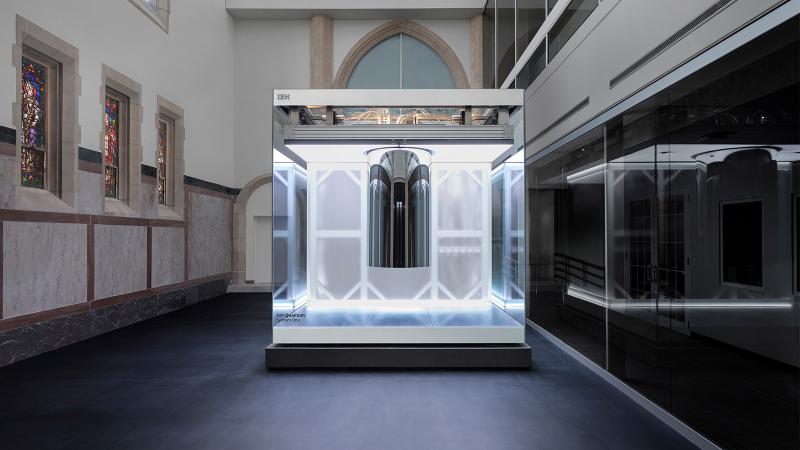
The proposed research would require the use of two of
Rensselaer’s state-of-the-art research facilities — the
Computational Center for Nanotechnology Innovations (CCNI) and
the Experimental Media and Performing Arts Center (EMPAC).
The most powerful university-based supercomputing system in
the world, the CCNI is made up of massively parallel Blue Gene
supercomputers, POWER-based Linux clusters, and AMD Opteron
processor-based clusters, providing more than 100 teraflops of
computing power.
EMPAC, opening in October 2008, features unparalleled
capabilities in visualization, audification, immersive
environments, sensor applications, communication technology,
and physical modeling.
Bringsjord is leading this project, with participation from
Rensselaer doctoral students Andrew Shilliday, Joshua Taylor,
and Micah Clark, as well as undergraduate researchers Ed
Charpentier and Alexander
Bringsjord.
The team’s initial research was recently presented at the
Artificial General Intelligence conference held at the
University of Memphis (http://www.agi-08.org).
|
Published
March 10,
2008 |
Contact: Amber Cleveland
Phone: (518) 276-2146
E-mail: clevea@rpi.edu |
|