|
New Approach Sheds Light on Ways Circadian Disruption Affects Human Health
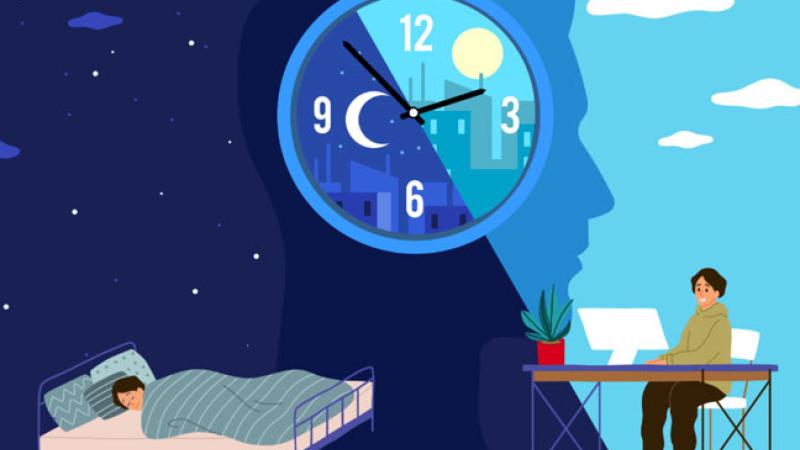
Growing evidence indicates that exposure to irregular
patterns of light and darkness can cause the human circadian
system to fall out of synchrony with the 24-hour solar day,
negatively affecting human health — but scientists have been
unable to effectively study the relationship between circadian
disruptions and human maladies.
The Daysimeter, shown above, measures an
individual’s daily rest and activity patterns, as well as
exposure to circadian light — short-wavelength light,
particularly natural light from the blue sky, that
stimulates the circadian system.
Photo Credit: Rensselaer/Dennis Guyon
|
A study by researchers in Rensselaer Polytechnic Institute’s
Lighting Research Center (LRC) provides a new framework for
studying the effects of circadian disruption on breast cancer,
obesity, sleep disorders, and other health problems.
Light and dark patterns are the major synchronizer of
circadian rhythms — the biological cycles that repeat
approximately every 24 hours — to the solar day. Inadequate or
irregular light exposure can cause circadian rhythm disruptions
that are believed to manifest into a variety of health
ailments. However, ecological studies to measure human light
exposure are virtually nonexistent, making it difficult to
determine if, in fact, light-induced circadian disruption
directly affects human health.
LRC researchers have created a small, head-mounted device to
measure an individual’s daily rest and activity patterns, as
well as exposure to circadian light — short-wavelength light,
particularly natural light from the blue sky, that stimulates
the circadian system. The device, called the Daysimeter, was
sent to 43 female nurses across the country to measure their
daily exposure to circadian light, according to Mark Rea,
director of the LRC and principal investigator on the
project.
The Daysimeter was worn for seven days by both day-shift and
rotating shift nurses and then returned to the LRC for
analysis. Simultaneously, Rea and his colleagues studied the
effect of irregular light exposure to the circadian system of
40 rats, in order to determine if the relationship between
circadian disruption and health outcomes could be uncovered
using rodent models.
Twenty rats were exposed to a consistently repeating pattern
of 12 hours of light followed by 12 hours of dark, to mimic the
light exposure experienced by day-shift workers. The remaining
rodents were exposed to irregular 12-hour patterns of light and
darkness.
For the nurses, circadian entrainment and disruption was
measured by comparing exposure light and darkness with each
individual’s rest and activity patterns. Wheel running was used
to measure rat rest and activity patterns.
A quantitative measure of circadian behavioral entrainment
or disruption for day-shift and rotating shift workers was
developed based on the circular cross-correlations of activity
and light exposure data from both the nurses and the rats. An
analysis technique commonly utilized in the field of signal
processing, circular cross-correlation involves the concept of
time-shifting one signal relative to another to determine
relationships between signals that might otherwise be obscured
due to timing differences.
“We found that the circadian entrainment and
disruption patterns for day-shift and rotating shift nurses
were remarkably different from each other, but remarkably
similar to the patterns for the two parallel groups of
nocturnal rodents,” says Rea. “The marked differences within
species, together with the marked similarities across species,
in addition to the new method of quantifying circadian
entrainment or disruption suggests that health-related problems
associated with circadian disruption in humans can be
parametrically studied using animal models.”
“This ability to quantitatively define circadian light
and dark for humans and for animals will allow a new class of
meaningful studies of light as a stimulus for circadian
entrainment or disruption to be undertaken, not only in humans,
but in nocturnal rodents as well – which, until now, has been
impossible,” says Rea. “Additionally, studies of circadian
disruption employing animal models for human disease can now be
designed and conducted to more accurately reflect their
relevance to the actual living conditions in humans.”
Rea carried out his research with LRC researchers Andrew
Bierman, Mariana Figueiro, and John Bullough, who are
co-authors on the paper. The study is published online in the
Journal of Circadian Rhythms and can be viewed in its
entirety at: http://www.jcircadianrhythms.com/content/6/1/7.
This project was supported in part by a grant from the
Centers for Disease Control and Prevention to Dr. Eva
Schernhammer at Harvard Public Health and by a Trans-National
Institutes of Health Genes, Environment and Health Initiative
grant to Rea.
|
Published
July 16,
2008 |
Contact: Amber Cleveland
Phone: (518) 276-2146
E-mail: clevea@rpi.edu |
|