|
Researchers Create Safer Alternative to Heparin
Larger amounts of fully synthetic heparin could be
ready for use in patients in five years
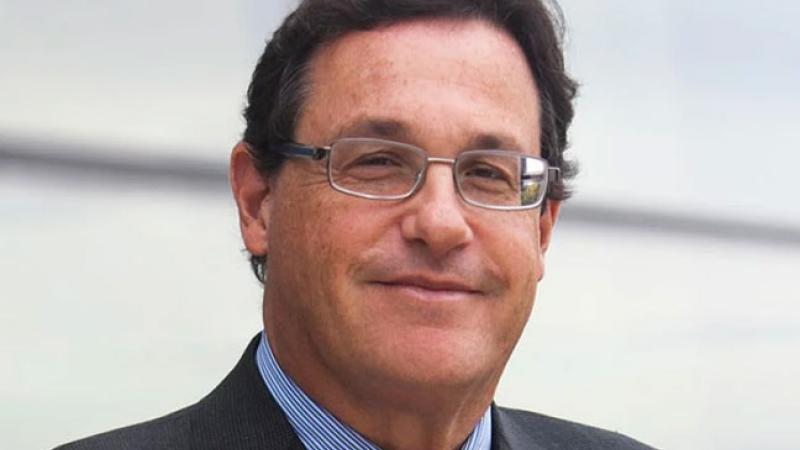
Robert Linhardt has spent years stitching together minuscule
carbohydrates to build a more pure and safer alternative to the
commonly used and controversial blood thinner heparin. At the
national conference of the American Chemical Society on August
17, 2008, Linhardt announced that his research team may have
accomplished this task by building the first fully synthetic
heparin. Their creation is the largest dose of heparin ever
created in the lab.
Heparin is used around the globe and is among the most
widely used drugs in American hospitals. The main source of
this heparin is the intestines of foreign livestock and the
risk of contamination from such sources is high, according to
Linhardt. And as Linhardt and others around the globe worked
toward an alternative, drug manufacturers worked to avoid
contamination, but the risks proved too high, Linhardt said. In
the spring of 2008, the search for a safer alternative to the
common drug had reached a frantic pace after more than 80
people around the world died and hundreds became ill after they
were administered what was believed to be contaminated batches
of heparin.
Linhardt, who is the Ann and John H. Broadbent Jr. ’59
Senior Constellation Professor of Biocatalysis and Metabolic
Engineering at Rensselaer Polytechnic Institute, was on the
international team that identified the suspected contaminant in
the Chinese heparin, a structurally similar carbohydrate called
oversulfated chondroitin sulfate.
“When we found the contamination, it was another sign that
the way we currently manufacture heparin is simply unsafe,” he
said. “Unlike the current heparin that is harvested from
possibly disease carrying animals in often very poor
conditions, our fully synthetic heparin will be created in a
pharmaceutical manufacturing environment from fermentation to
packaging. This will give drug manufacturers extreme control
over the safety and purity of the product.”
Linhardt, together with Jian Liu of the University of North
Carolina, discovered the synthetic “recipe” for heparin in
2006. Since that time he has worked to piece together the
various molecules and grow a complex carbohydrate that is
naturally created in the body in the lab. The carbohydrate
backbone for the new heparin comes from the bacteria E.
coli. The use of the common and easily grown bacteria
makes this version of heparin much easier and faster to
produce, according to Linhardt. The team used a process called
chemoenzymatic synthesis that used specialized synthetic
chemicals and natural enzymes expressed in E. coli to
replicate the normal biosynthesis of natural heparin within the
cell.
The dose that Linhardt and his team were able to produce
with this method was a million times higher than any other
alternative created to date. He will now continue to work with
his partners to take the milligram dose that they have
developed and expand it to kilograms. “Ultimately, drug
companies are going to need to produce tons of this drug to
keep up with global demand,” he said. “Such levels of
productions are further down the road. We think that in five
years, it is very possible that this drug could reach human
clinical trials.”
The milligram-scale synthesis of heparin will be published
in the Journal of the American Chemical Society. To
complete the research, Linhardt was joined by Zhenqung Zhang,
Scott McCallum, and Jin Xie at Rensselaer; Lidia Nieto and
Jesus Jimenez-Barbero at Centro de Investigaciones Biologicas;
Francisco Corzana at Universidad de La Rioja UA-CSIC; and Miao
Chen and Jian Liu at the University of North Carolina, Chapel
Hill. He is currently working with Jonathan Dordick at
Rensselaer and Jian Liu from Chapel Hill and Shaker Mousa from
Albany College of Pharmacy to create and evaluate the larger
batches of the drug.
|
Published
August 17,
2008 |
Contact: Jason Gorss
Phone: (518) 276-6098
E-mail: gorssj@rpi.edu |
|