|
Rensselaer Opens the Curtis R. Priem Experimental Media and Performing Arts Center (EMPAC)
Experimental center to explore nexus of arts,
science, and technology — virtual and real
Rensselaer Polytechnic Institute today opens the
Experimental Media and Performing Arts Center (EMPAC), an
unprecedented experimental center dedicated to the integrated
pursuit of the performing arts and sciences.
The project was launched under President Shirley Ann
Jackson’s Rensselaer Plan, which also has included
building one of the world’s most powerful university-based
supercomputers, opened in 2007, and a major center for
biotechnology research, completed in 2004.
EMPAC was made possible by a lead gift of $40 million from
Nvidia co-founder and Rensselaer alumnus Curtis R. Priem ’82.
The building was formally named for Priem at the Oct. 3
dedication.
“EMPAC is an unprecedented platform for creativity and
discovery, a world-class performing arts center and a high-tech
research facility under one roof,” said Jackson. “It is a major
center for collaborative inquiry — a center for artists,
scientists, and engineers to come together to pursue discovery
at the nexus of the real and virtual worlds. It is a platform
for seamless, ‘minds-on’ engagement to respond to complex
research questions in areas as diverse as biotechnology,
artificial intelligence, and acoustics. EMPAC introduces a new
model for educating the next generation of leaders, who will be
better prepared to solve the complex problems facing our
world.”
“The collaborative, interdisciplinary, and project-based
approach of EMPAC creates an environment in which scientific
and artistic imagination are reciprocal,” said Johannes Goebel,
director of EMPAC. “The engineer develops technology that may
enable the artist to fulfill the creative vision, while the
artist challenges the engineer with unexpected approaches to
meet the project’s needs.”
EMPAC is a 220,000-square-foot platform for performance and
research designed by acclaimed international architectural firm
Grimshaw. EMPAC incorporates four distinct and specialized
venues under one roof: an acoustically optimized
1,200-seat concert hall, a 400-seat theater, and two black-box
studios created for flexible use by artists and
researchers.
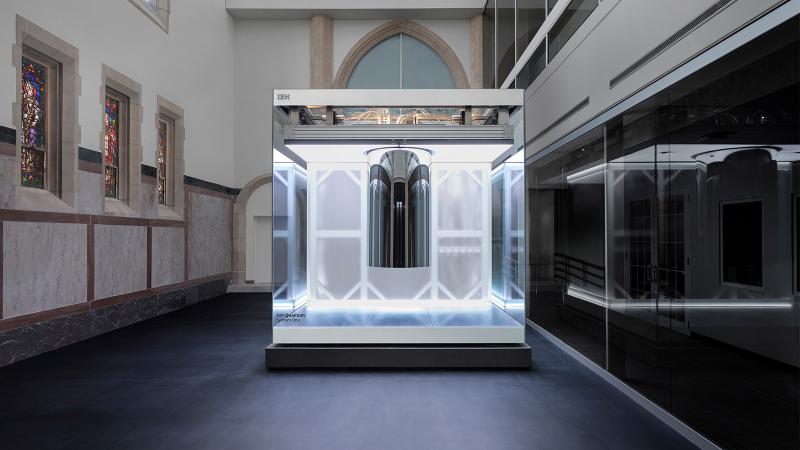
Linked to the university’s powerful supercomputer (the
Computational Center for Nanotechnology Innovations, CCNI),
which will enable complex modeling and visualization, EMPAC
will be a platform for the Rensselaer campus, its academic
partners, and visiting artists from around the globe to
experiment in critical fields.
“EMPAC will enable human-scale interactive exploration of
immersive/sensory environments,” said John Kolb, vice president
for information services and technology and chief information
officer. “This will allow broad exploration in fields
such as investigation of fluid dynamics, artificial
intelligence, molecular design, financial modeling,
nanotechnology, and gaming and simulation.”
“We could have followed the model of other technological
institutions, and elected to expand our humanities, arts, and
social science school in the traditional manner,” said Samuel
Heffner ’56, chairman of the Board of Trustees. “But because
this idea is uniquely ours, we chose EMPAC instead. Much more
than a concert hall, it is a true laboratory and a significant
move forward not only for Rensselaer, but for the concept of
the blending of arts and technology.”
Unique among centers for the performing arts, EMPAC employs
a complete curatorial staff specializing in music, dance, and
the media arts that collaborate across disciplines and with the
center’s technology team. For the past four years, this
team has worked with artists to create significant programs on
the Rensselaer campus, ranging from performances by Australian
dance company BalletLab to a major EMPAC-specific
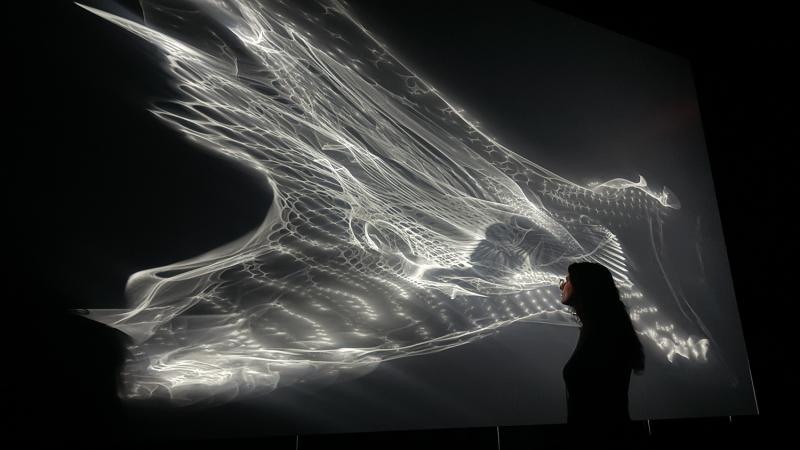
light installation by artist Jennifer Tipton. The opening
season within EMPAC will include works by The Wooster
Group, Toronto-based Workspace Unlimited, The
OpenEnded Group from New York City, and the premiere of a
series of Dance Movies. Many of these works were
commissioned by EMPAC.
Architect Nicholas Grimshaw’s design is an imaginative,
high-tech set of contiguous, multi-use spaces engineered to the
most exacting acoustical standards. A look inside the building
brings this vision into sharp focus.
“The design concept for the building was based on the dual
program it supports: a world-class concert hall for traditional
orchestral music, and cutting-edge, completely flexible spaces
for experimental art and media performance or research,”
Grimshaw said. “The search for a way to express both the
history and transience of the building’s technological program
led us to split the building into halves — the ‘digital’ half
containing the flexible spaces of the studios and theater, and
the ‘analog’ side containing the traditional shoebox shape
concert hall.”
EMPAC is anchored into a 45-degree hill overlooking Troy and
the Hudson River. Visitors enter the building’s lobby at the
top of the hill. A series of bridges cross over a three-story
atrium and pierce into a cedar “hull” that houses the concert
hall. A grand staircase descends on the side of this space and
leads to the theater and black box studio spaces.
EMPAC originally was designed as a 142,000-square-foot
building with a budget of $142 million. As the concept was
refined, the spaces in the building were expanded, raising the
footprint of the building to its current 220,000 square feet,
and the budget was increased to approximately $200 million,
including construction, technology, and furnishings.
From an engineering and technological standpoint, EMPAC is
state-of-the-art. Each of the contiguous spaces is built in
acoustic isolation from one another. A massive
20,000-square-foot glass curtain wall features mullions that
carry heated water to insulate the space from the Northern New
York winter. This is the first time that this technology has
been adopted in the United States. The HVAC system, virtually
silent to preserve the integrity of performances and research,
uses displacement ventilation to push air through registers
under the seats. The technology at EMPAC includes more than
8,000 inputs and hardwiring to the university’s supercomputer
(CCNI).
“What we have created is the world’s foremost center for
performing arts, technology, and experimental media,” said
Rensselaer trustee and EMPAC donor Curtis Priem ’82. “We set
out to build a performing arts and research center with
unparalleled technology throughout the building, from acoustics
and lighting to heating and cooling, and we have achieved
that.”
Rensselaer will celebrate the opening of EMPAC with three
weekends (October 3 to 19) of symposia, performance events, and
guest artist appearances. For a complete schedule of events,
please visit: empac.rpi.edu.
|
Published
October 3,
2008 |
Contact: Amber Cleveland
Phone: (518) 276-2146
E-mail: clevea@rpi.edu
Contact: John Rodat
Phone: (518) 276-4378
E-mail: rodatj2@rpi.edu |
|