|
Data Scientist Joins Rensselaer Tetherless World Research Constellation
Peter Fox bridges the divide between scientists and
the data that separates them
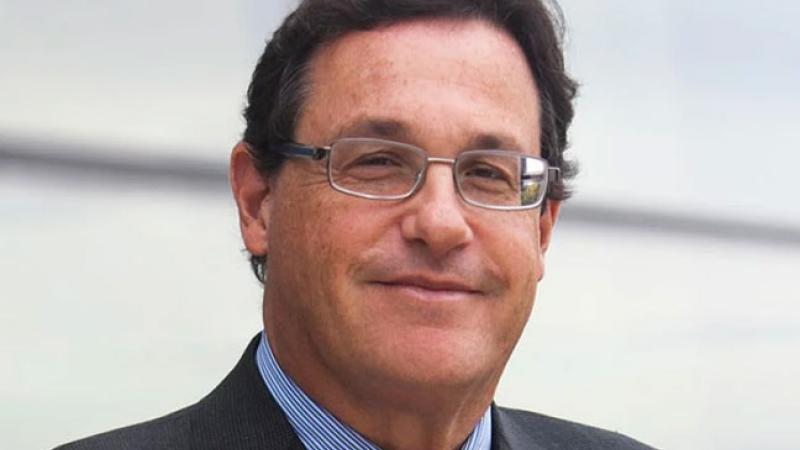
Peter Fox has joined Rensselaer Polytechnic Institute as the
newest chair of the Tetherless World Research Constellation.
Fox brings extensive experience as both a data and
solar-terrestrial scientist, joining two of the world’s top Web
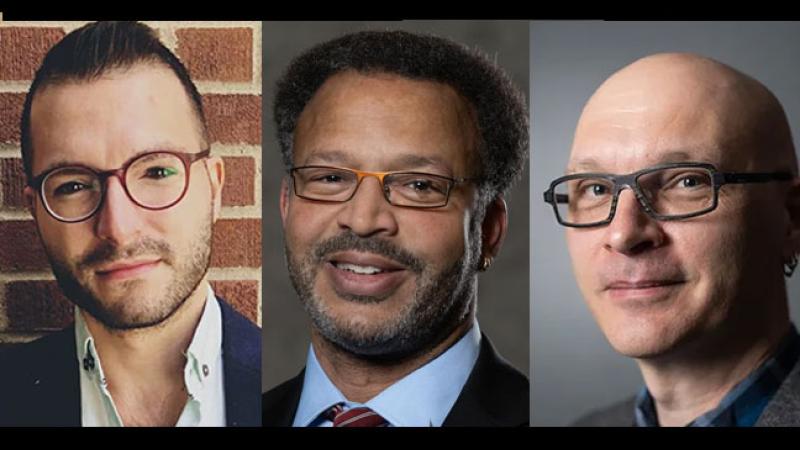
scientists — James Hendler and Deborah McGuinness — to complete
the senior leadership of the constellation, which was created
in 2006. He also will serve on the faculty of the Department of
Earth and Environmental Sciences.
“With the addition of Dr. Fox, we have filled another
constellation and now have three top researchers who are
working to use and understand the Web in ways that have never
before been explored, placing Rensselaer as a world leader in
the emerging field of Web Science,” said Rensselaer Provost
Robert Palazzo. “Dr. Fox’s research is an excellent complement
to existing research of the constellation and will help
scientists around the world use the power of the World Wide Web
to enhance scientific discovery and work together in a more
global, collaborative way.”
In an era of supercomputers like the more than 100 teraflop
Computational Center for Nanotechnology Innovations (CCNI) at
Rensselaer, scientists can analyze amounts of data in one day
that previously would have taken months, according to Fox. In
his research, Fox uses computer programs and algorithms to mold
the data of scientists so it can be easily shared, interpreted,
and duplicated by other scientists and, importantly for him,
understood by a range of non-specialists including the
public.
“Scientists create highly complex data on their own,
but to solve large-scale interdisciplinary problems these
researchers need technologies to cross the disciplinary and
information divide so that once data is discovered and
analyzed, the results and conclusions can be reliably and
inexpensively reproduced,” Fox said. “If scientists can quickly
and rigorously reproduce the results of their colleagues, that
knowledge can quickly be built upon instead of stopping at that
point in its development because no one else can easily work
with the foundational data that they need to begin
with.
Fox sees the Web as the main engine for this global
scientific data sharing. “With the Web we can combine the
computational power and information from every computer in the
world,” he said. Fox also sees the Web as key to involving the
public in scientific discovery: “The Web will be the tool by
which we present science. It is the tool that the general
public is going to use to access this information and perhaps
build on the data on their own as citizen scientists.”
Fox has spent the past 17 years as chief computational
scientist at the High Altitude Observatory of the National
Center for Atmospheric Research with two primary pursuits. Fox
is using his computational research to address one of the most
the most pressing global issues — contributions to climate
variability. In particular his research looks at variations in
solar radiation and models how that correlates to changes in
the climate. Since 2003 he was also served as a member of the
Universities Space Research Association (USRA) virtual
institute for the Study of Solar Variability on Climate. He was
also a visiting researcher at Sydney University in Australia as
well as the Yale University Center for Solar and Space
Research. Secondly, due to the need to integrate vast amounts
of data on a range of science projects, Fox has brought
semantic web and grid methodologies and technologies to a new
paradigm of virtual observatories — which aim to provide access
to distributed and heterogeneous data holdings, spread over the
Internet and disciplines, to a wide audience making them appear
to be local and integrated. This work is now becoming part of
the Tetherless World activity in semantic data frameworks
facilitating semantic e-science.
He has published more than 70 papers on his research and is
an active proponent in the effort to erase the digital divide
between the northern and southern hemispheres, meeting
regularly with colleagues from around the world to increase
global connectivity.
Fox earned both a bachelor’s honors degree and doctorate in
mathematics from Monash University. He is a member of the
Association for the Advancement of Artificial Intelligence, the
Earth Science Information Partnership, the European Geosciences
Union, the American Astronomical Society Solar Physics
Division; and the American Geophysical Union.
The Tetherless World Constellation at Rensselaer addresses
Web Science, focusing on the World Wide Web and its future use.
The constellation is developing multidisciplinary teams of
senior and junior faculty, graduate students, and
undergraduates in everything from information technology and
computer science to cognitive science and sociology. The goals
of the constellation are to explore the research and
engineering principles that underlie the Web, enhance the Web’s
research beyond the desktop and laptop computer, and develop
new technologies and languages that expand the capabilities of
the Web.
|
Published
November 13,
2008 |
Contact: Gabrielle DeMarco
Phone: (518) 276-6542
E-mail: demarg@rpi.edu |
|