Robert Linhardt Named One of the Scientific American 10
Robert J. Linhardt, the Ann and John H.
Broadbent Jr. ’59 Senior Constellation Professor of
Biocatalysis and Metabolic Engineering
|
Drug safety research noted for “guiding science for
humanity”
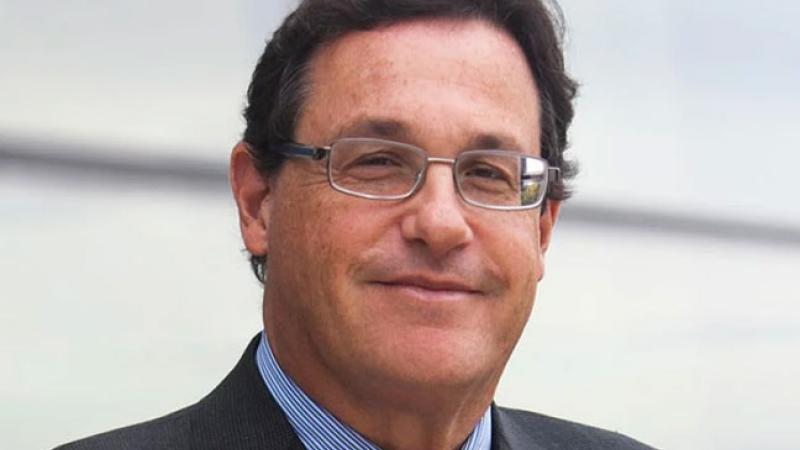
Robert J. Linhardt, the Ann and John H. Broadbent Jr. ’59
Senior Constellation Professor of Biocatalysis and Metabolic
Engineering at Rensselaer, has been named one of the
Scientific American 10. Linhardt is featured in the
June 2009 edition of the popular science and technology
magazine for his lifesaving work with the commonly used blood
thinner heparin alongside nine other global innovators
including philanthropist and business leader Bill Gates and
President Barack Obama.
“Dr. Linhardt’s work with heparin will help ensure that a
safe supply of this widely used drug is available to those who
need it most,” said Rensselaer President Shirley Ann Jackson.
“He is also building the foundation to bring an entirely new
and safer blood thinner to patients and hospitals worldwide.
Dr. Linhardt is an exceptional researcher, and a gifted teacher
and mentor. He brings to his research a sense of purpose and
dedication that is well known by all who have the privilege of
working with him.”
The 10 people recognized by Scientific American
were noted for their “demonstrated outstanding commitment to
assuring that the benefits of new technologies and knowledge
will accrue to humanity.”
Linhardt, who is among the world’s foremost experts on
heparin, has helped make the currently available heparin safer
for patients and is leading the effort to create a safer, fully
synthetic alternative to the current heparin, which is
harvested from the intestines of mostly foreign livestock.
In early 2008, following the deaths of patients around the
world from a routine dosage of heparin, scientists scrambled to
find the cause. In April 2008, Linhardt and a small team of
scientists announced the source of the patient death and
illness — a complex carbohydrate named oversulfated chondroitin
sulfate. It was a contaminate so structurally similar to
heparin it was nearly undetectable to some of the most advanced
technology available.
And while Linhardt continues to develop more sophisticated
detection systems to ensure a safer stream of drugs to the
marketplace, he is also helping lead the race for a safer,
man-made alternative to the traditional biologic heparin.
Linhardt and Jian Liu at the University of North Carolina
discovered the “recipe” for synthetic heparin three years ago.
In August 2008, at the national conference of the American
Chemical Society, Linhardt announced that his team had
constructed minuscule carbohydrates into a purer, safer
alternative — creating the first fully synthetic heparin, and
the largest amount ever created in the laboratory.
With Linhardt’s discovery, a fully synthetic heparin can be
created in a pharmaceutical manufacturing environment, giving
drug manufacturers extreme control over the safety and purity
of the product. He believes that within five years, it is
possible that this drug could reach human clinical trials. He
is currently working to upscale production of the new drug.
Visit Robert Linhardt’s Web-site for additional
information on his heparin research.
|
Published
May 26,
2009 |
Contact: Gabrielle DeMarco
Phone: (518) 276-6542
E-mail: demarg@rpi.edu |
|