|
Rensselaer To Lead Multimillion-Dollar Research Center for Social and Cognitive Networks
With $16.75 million in funding from the Army Research
Laboratory (ARL), Rensselaer Polytechnic Institute will launch
a new interdisciplinary research center devoted to the study of
social and cognitive networks.
The Center for Social and Cognitive Networks is part of the
newly created Collaborative Technology Alliance (CTA) of the
ARL, which includes a total of four nationwide centers focused
on different aspects of the emerging field of network
science.
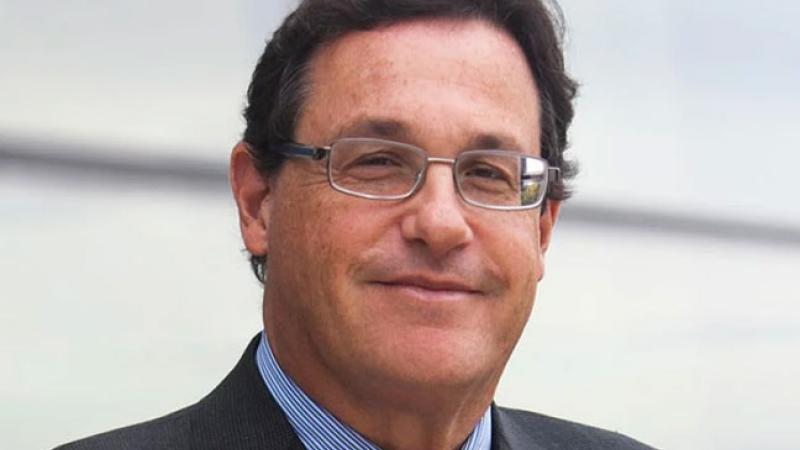
The Rensselaer center will be headed by Boleslaw Szymanski,
Rensselaer’s Claire & Roland Schmitt Distinguished
Professor of Computer Science. Rensselaer will receive $8.6
million of the $16.75 million in total funding to lead the new
center for its first five years. An additional $18.75 million
is anticipated from the ARL for a second phase, which would
bring the total funding for the interdisciplinary center to
$35.5 million over 10 years.
Rensselaer will be joined by corporate and academic partners
from IBM Corp., Northeastern University, and the City
University of New York, and collaborators from Harvard
University, Massachusetts Institute of Technology, New York
University, Northwestern University, the University of Notre
Dame, the University of Maryland, and Indiana University.
“Rensselaer offers a unique research environment to
lead this important new network science center,” said
Rensselaer President Shirley Ann Jackson. “We have assembled an
outstanding team of researchers, and built powerful new
research platforms. The team will work with one of the largest
academic supercomputing centers in the world — the Rensselaer
Computational Center for Nanotechnology Innovations — and the
leading visualization and simulation capabilities within our
new Experimental Media and Performing Arts Center. The Center
for Social and Cognitive Networks will bring together our
world-class scientists in the areas of computer science,
cognitive science, physics, Web science, and mathematics in an
unprecedented collaboration to investigate all aspects of the
ever-changing and global social climate of today.”
“A unique feature of this center will be its
interdisciplinary approach,” said Rensselaer Provost Robert
Palazzo. “It has been a pleasure to work with Professor
Szymanski and the faculty in drawing upon the strengths of the
Rensselaer academic disciplines that will contribute to
building knowledge in this important emerging field. The center
will capitalize on the platforms President Jackson has put in
place to support new levels of interdisciplinary research.”
“Together with other centers of the CTA, we are creating the
new discipline of network science,” said Szymanski. “The
centers will be in the leading position to define this new
discipline in all its complexity. Rensselaer researchers are
very pleased to be a leading part of this transformation.”
The Center for Social and Cognitive Networks will link
together top social scientists, neuroscientists, and cognitive
scientists with leading physicists, computer scientists,
mathematicians, and engineers in the search to uncover, model,
understand, and foresee the complex social interactions that
take place in today’s society. All aspects of social networks,
from the origins of adversarial networks to gauging the level
of trust within vast social networks, will be investigated
within the center.
The center will enable stronger and more closely integrated
collaborations among the team of top interdisciplinary
researchers in the emerging field of network science that
already existed informally, according to Szymanski.
“I explored those earlier links and collaboration when
organizing the team for the center,” he said. “The impact of
our work will be far-reaching. We are in an entirely new world
where Twitter, cell phones, and wireless communication change
the way we interact with each other. Together and with the
support of the ARL, the researchers in the center will be able
to investigate how technology enhances social interactions and
how those technologies and relationships can be used to better
measure and understand people’s interactions with each
other.”
Several Rensselaer faculty will take part in the center
research. Szymanski will be leading the interdisciplinary team
that includes Senior Professor of the Tetherless World Research
Constellation and head of Information Technology James Hendler;
Professor of Cognitive Science and Acting Head of the School of
Humanities, Arts, and Social Sciences Wayne Gray; Associate
Professor of Computer Science Sibel Adali ; Associate Professor
of Computer Science Malik Magdon-Ismail; Professor of Computer
Science Mark Goldberg; Professor of Mathematical Sciences Chjan
Lim; Professor of Decision Sciences & Engineering Systems
William Wallace; Associate Professor of Physics, Applied
Physics, and Astronomy Gyorgy Korniss; and Research Associate
Professor of Cognitive Science Michael Schoelles.
The center will study the fundamentals of social and
cognitive networks and their roles in today’s society and
organizations, including the U.S. Army. The goal will be to
gain a deeper understanding of these networks and build a firm
scientific basis in the field of network science. The work will
include research on large social networks, with a focus on
networks with mobile agents. An example of a mobile agent is
someone who is interacting (e.g., communicating, observing,
helping, distracting, interrupting, etc.) with others while
moving around the environment. The U.S. Army and the societies
within which it operates are primary examples of such networks,
according to Szymanski.
Five topics will be the focus of the center’s research. One
will be dynamic processes in networks. Today’s modern societies
are supported by organically evolving network structures, which
contribute to the transport and storage of various entities,
including materials, energy, information, and people across
vast time and space. At the same time, technological advances
provide tools to better monitor social interactions and also
influence social networks by providing novel ways for humans to
interact, Szymanski said. With this in mind, the researchers
will work to understand both the human interactions and the
underlying technological infrastructure they utilize. To do
this, the researchers will combine theoretical and
computational tools from the disciplines of sociology,
political science, computer science, mathematics, and
physics.
A second area will study organizational networks and how
knowledge, particularly in the Army, is spread from peer to
peer in the modern military. Researchers will search for
digital traces of collaboration and communication within an
organization at all levels to understand how information
flows.
The third focus area will be the study of adversary
networks. This research has important implications for the Army
in dealing with terrorists and other hidden groups within a
society, according to Szymanski. The research will seek ways to
monitor the activities of adversary networks, to map the
composition and hierarchy of the network, and to understand
their dynamics and evolution over time. The work will bring
together expertise ranging from computer science to game
theory.
“Adversary networks can be discovered very early in their
development by careful social network analysis,” Szymanski
said. “Studying the technologies they use and how they use them
will allow us to act well before the adversary network has
reached maturity. This will greatly minimize their impact
within their society as well as our own.”
A fourth focus examines trust in social networks. The
researchers will seek to measure the level of trust within a
network and understand how the impacts of trust move
information through a network. For example, researchers will
use mathematical and computational modeling to understand how
different types of social interactions impact an individual’s
thoughts and behaviors. This work will also rely heavily on
collaborations with computer scientists that will model and
compute how actors in a social network build trust and use that
trust to spread information.
Finally, the center will look at the impacts of human error
in social networks. This research will utilize computational
systems that predict how human error or bias will influence
their judgment.
“As the diversification of nations and societies progresses,
understanding of social and cognitive networks and their
impacts on people’s behavior and operation will become
increasingly important,” Szymanski said. “These networks impact
the Army in all aspects of its operations, from internal
cohesiveness to their ability to perform complex missions in
increasingly complex international social environments. Equally
important is that these networks impact our society in a very
similar way, as the complexity of social interactions grows and
the influence of other societies on our lives increases.”
|
Published
October 22,
2009 |
Contact: Gabrielle DeMarco
Phone: (518) 276-6542
E-mail: demarg@rpi.edu |
|