|
Rensselaer Professor Robert Linhardt Selected as 2009 AAAS Fellow
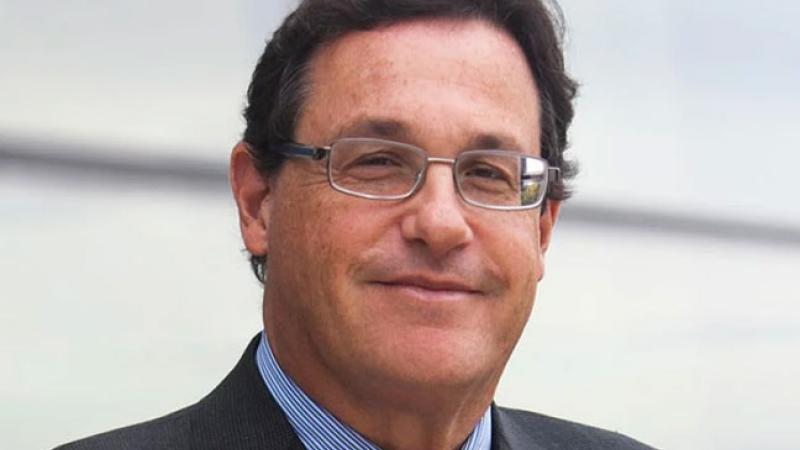
Robert Linhardt, the Ann and John H. Broadbent Jr. ’59
Senior Constellation Professor of Biocatalysis and Metabolic
Engineering at Rensselaer Polytechnic Institute, has been
selected as a fellow of the American Association for the
Advancement of Science (AAAS). Linhardt is one of 531 newly
selected fellows recognized for their efforts to advance
science or its applications that are deemed scientifically or
socially distinguished, according to AAAS. The announcement
will be made in Dec. 18, 2009, issue of the journal
Science.
In the announcement, AAAS cites Linhardt for “distinguished
contributions to pharmaceutical chemistry, particularly for
research on the structure, activity, and synthesis of the
anticoagulant drug heparin and related polysaccharides.” AAAS
will honor the new fellows at its annual meeting on Feb. 20,
2010, in San Diego, Calif.
“Professor Linhardt’s work to develop a safer alternative to
one of the most widely used drugs in American hospitals has
made him a world-renowned leader in his field,” said Rensselaer
Polytechnic Institute President Shirley Ann Jackson, who also
is a former president of AAAS. “He is an exceptional researcher
as well as teacher and mentor. His tireless dedication to both
his laboratory and his students makes him exceptionally
deserving of this prestigious recognition, and we are proud to
have him as a colleague at Rensselaer.”
Linhardt has helped to make the currently available heparin
safer for patients, helping to discover a contaminant in the
drug that made hundreds of patients ill in 2008. He is also
leading the effort to create a safer, fully synthetic
alternative to the current heparin, which is harvested from the
intestines of livestock.
Linhardt and Jian Liu at the University of North Carolina
discovered the “recipe” for synthetic heparin three years ago.
In August 2008, at the national conference of the American
Chemical Society, Linhardt announced that his team had
constructed minuscule carbohydrates into a purer, safer
alternative — creating the first fully synthetic heparin, and
the largest amount ever created in the laboratory.
With Linhardt’s discovery, a fully synthetic heparin can be
created in a pharmaceutical manufacturing environment, giving
drug manufacturers extreme control over the safety and purity
of the product. He believes that within five years, it is
possible that this drug could reach human clinical trials.
Government agencies and numerous foundations and
corporations have provided extensive funding for Linhardt’s
research. An active contributor to professional publications,
Linhardt has served on the editorial board of such top journals
as the Journal of Biological Chemistry, Applied
Biochemistry and Biotechnology, and the Journal of
Carbohydrate Chemistry. He has published more than 450
research papers and holds 45 patents. In 2009, Linhardt was one
of 10 people — alongside U.S. President Barack Obama and
business leader Bill Gates — recognized by Scientific
American for his “demonstrated outstanding commitment to
assuring that the benefits of new technologies and knowledge
will accrue to humanity.”
After 21 years on the faculty of the University of Iowa,
Linhardt joined Rensselaer in 2003 as a senior constellation
professor. He earned a master’s and doctoral degrees in organic
chemistry from the Johns Hopkins University and a bachelor’s
degree in chemistry from Marquette University.
|
Published
December 17,
2009 |
Contact: Gabrielle DeMarco
Phone: (518) 276-6542
E-mail: demarg@rpi.edu |
|