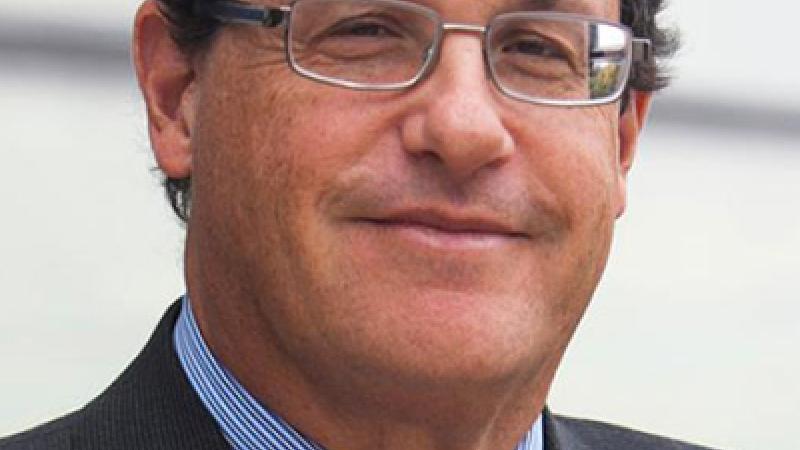
White House Cabinet Member Peter R. Orszag Advises Rensselaer Graduates To Be Empirical and Resilient
White House Office of Management and Budget
Director Addresses Nearly 1,400 Graduates at Rensselaer
Polytechnic institute’s 204th Commencement; President Shirley
Ann Jackson Urges Graduates To Collaborate in
Innovation
White House Office of Budget and Management Director Peter
R. Orszag offered the Class of 2010 at Rensselaer Polytechnic
Institute two pieces of advice at the Institute’s Commencement
today: “First, be empirical; and second, be
resilient.”
He addressed nearly 1,400 graduates and their families at
Rensselaer’s 204th Commencement today, the first to be held in
the stadium at the Institute’s new East Campus Athletic
Village.
“Class of 2010, you are about to join the ranks of RPI
alumni — individuals who literally built America — from Ferris
wheels to Fenway Park; from the transcontinental railroad to
the Brooklyn Bridge,” Orszag said. “Individuals who changed our
lives by putting TV’s in our homes, GPS in our cars, the “@”
symbol in our e-mail, and — most importantly from the
perspective of my 8-year-old son—Guitar Hero 5 on our
Wii’s.”
See the
full text of Orszag’s speech.
As graduates look ahead to their careers and lives which
will shape our nation and our world for decades to come, he
continued, “Let me use the privilege of being your Commencement
speaker to offer two pieces of advice: first, be empirical; and
second, be resilient.”
Be empirical, Orszag said, by applying theories with
humility and checking them against evidence.
“This is especially true when it comes to the intersection
of science and human beings,” he said. “Because whenever and
wherever people are involved, the allure of pure mathematical
elegance can lead us badly astray.”
Orszag cited his own field of economics, which once largely
subscribed to the theory that humans behaved as rational
supercomputers who carefully weigh costs and benefits and
ultimately do what is optimal.
If that were true, he continued, the Class of 2010 would
have arrived at Commencement having rationally calculated years
ago that hard study, good marks, and admission to a good
college would lead to a better life.
Instead, he said, today’s graduates owe their success to a
host of factors, “most especially including the norms of those
around you, that excited you about computers, engineering, or
science ... people around you who made it clear that doing well
academically was not just a necessity, but actually
‘cool.’”
Such insights, such willingness to accept empirical
evidence, are what have led behavioral economists to better
understand the true motivation behind actions beneath the
rationale of a human supercomputer — like eating too much
popcorn at the movies, not saving enough money for retirement,
and wasting energy.
And in accepting that evidence, we are better able to tackle
what problems we study.
“The bottom line is that as you move forward in whatever
fields you pursue, always try to square the theory with actual
observations,” Orszag said.
For his next piece of advice, Orszag recalled that, at the
time of his college graduation, he “valued raw intelligence
more than virtually any other human attribute.” But he has
since learned that “it’s not smarts that matters most; it’s
resilience.”
“It is this ability to overcome adversity that is perhaps
the single most important determinant of a well-led life—not
only as reflected in external things such as how nice your
house is, how lofty your title, or how large your paycheck —
which ultimately will mean less to you than you might think now
— but more crucially as measured by your own sense of self,”
Orszag said.
“This resilience will empower you to try new things and
posit new — or even radical — ideas,” Orszag said. “Ultimately,
it is that stubborn refusal not to be deterred that has built
America — that has made our labs, our universities, and our
businesses the envy of the world.”
“So, as you set out to write the next chapter of your
lives,” he concluded, “throw yourself at what you’re doing;
follow the evidence; take calculated risks; and find comfort in
how you approach adversity — rather than trying to eliminate
it.”
President Jackson urges graduates to collaborate in
innovation
Rensselaer President Shirley Ann Jackson told graduates that
a full economic recovery will demand innovation. And in
innovation, the Class of 2010 is at an advantage.
“Although young people do not have an absolute
monopoly on new ideas ... there are advantages to being young,
in that you have not yet spent decades steeped in conventional
wisdom,” Jackson said. “So, graduates, we all are depending on
you for the insights that will help us to create new
industries, to create new jobs, and to solve the great global
challenges.”
Truly transformative ideas, she said, come from
collaboration and the intersection of academic disciplines.
“I hope that you will remember one idea that we have worked
hard to weave into the fabric of the Institute: the supreme
importance of talking to people outside your own field
of expertise,” Jackson said. “Conversation is a prerequisite
for collaborative innovation, and for the movement of great
ideas out into the world.”
The Class of 2010 is more greatly empowered to access
information and express its voice than any of its predecessors.
From today’s Internet and social media to tomorrow’s Semantic
Web platform — being built at Rensselaer — the “Power of One”
has never been greater.
“In other words, as newly minted graduates of Rensselaer,
with formidable minds and skills, you have power to create and
use technology responsibly — and beyond technology, you have
the power to be leaders,” Jackson said.
But with great power, comes great responsibility, and
Jackson urged graduates to “use the remarkable tools at your
disposal wisely. To be truly effective, communication requires
attention as much as expression, empathy as
much as will, and generosity as much as personal
confidence.”
“Graduates, today I hope that you, too, will wring new
meanings from the stars overhead, or from the particles in an
accelerator, or from the carbon nanotube in the wing of a
futuristic airplane,” Jackson said. “But I also hope that you
will learn how to strike up a conversation with the person who
sits next to you on that same airplane; that you will take the
time now and then to ask a colleague in a different department
about his or her work; that occasionally, you will read a paper
or article in a subject that is not your own; that you will not
be afraid to give a speech or a bit of advice when asked; that
you will keep corresponding with, and talking to, the old
friends at your alma mater. And that you always will find a
moment to tell your family and friends that you love them on
occasions as beautiful as this one. For you are sure to have
many.”
See the full text of Jackson’s speech at:
http://www.rpi.edu/president/speeches/ps052910-commencement.html
Class president exhorts classmates to bold action
despite economic uncertainty
“My advice to you is this: be persistent, be tenacious,
don’t give up, and don’t take ‘no’ as an answer,” Class of 2010
President Samuel Punshon-Smith said. “Follow your passions and
try as hard as you can to get what you want in life,
and don’t be afraid of failure. There is no such thing — just
experiences and what you can learn from them.”
Punshon-Smith acknowledged the uncertain economic climate
graduates enter.
“I wish I could say that we are all walking out into a
booming economy and a wide open job market,” Punshon-Smith
said. “Sadly, things aren’t so easy, at least not yet.”
But, he said, our times are “exciting and ambivalent.”
“Here we are, a legion of intelligent and high-quality
professionals, academics, entrepreneurs, and leaders, about to
be let loose onto an unsuspecting world,” Punshon-Smith said.
“The future is unknown, and every day we are faced with
enormous technical problems, challenging questions, and
exciting potential for new growth and development. We have now
been given the unique ability to get out and solve these
problems, answer these questions, and change the world the way
we see fit. Why not?”
See the full text of Smith’s speech at:
http://www.rpi.edu/about/colloquy/2010/punshon-smith052910.html
Celebrated guests awarded honorary
degrees
In addition to delivering the Commencement address, Orszag
received an honorary Doctor of Laws degree. Rensselaer also
bestowed honorary degrees upon Robert S. Langer, Neil deGrasse
Tyson, and Harold E. Varmus.
Langer, who received an honorary Doctor of Engineering
degree, is a renowned biotechnology pioneer, who currently
serves as the David H. Koch Institute Professor at the
Massachusetts Institute of Technology (MIT). His research
laboratory at MIT, which has been called the largest biomedical
engineering laboratory in the world, is responsible for key
advances in the administration of drugs through the skin
without needles or other invasive methods, and important tissue
engineering breakthroughs.
deGrasse Tyson, who received an honorary Doctor of Science
degree, is a leading voice in astrophysics and a champion of
increased science literacy for the general public, and
currently serves as the Frederick P. Rose Director of the
Hayden Planetarium at the American Museum of Natural History in
New York.
Varmus, who received an honorary Doctor of Science degree,
is co-recipient of the 1989 Nobel Prize in Physiology or
Medicine for his pioneering studies of the genetic basis of
cancer. Varmus is the president of Memorial Sloan-Kettering
Cancer Center in New York City and currently serves as co-chair
of the President’s Council of Advisors on Science and
Technology. President Barack Obama recently announced the
appointment of Varmus to serve as director of the National
Cancer Institute.
Commencement streamed live via Web
Rensselaer Polytechnic Institute’s 204th Commencement was
broadcast live on the Web. A re-broadcast of the event can be
viewed at
http://mediasite.itops.rpi.edu/Mediasite5/Viewer/?peid=91c84f49e60c4682b5b148047b56d909.
|
Published
May 29,
2010 |
Contact: Mary L. Martialay
Phone: (518) 276-2146
E-mail: martim12@rpi.edu |
|