Engineering for Development in the Third World Needs a Makeover, Finds Rensselaer Professor
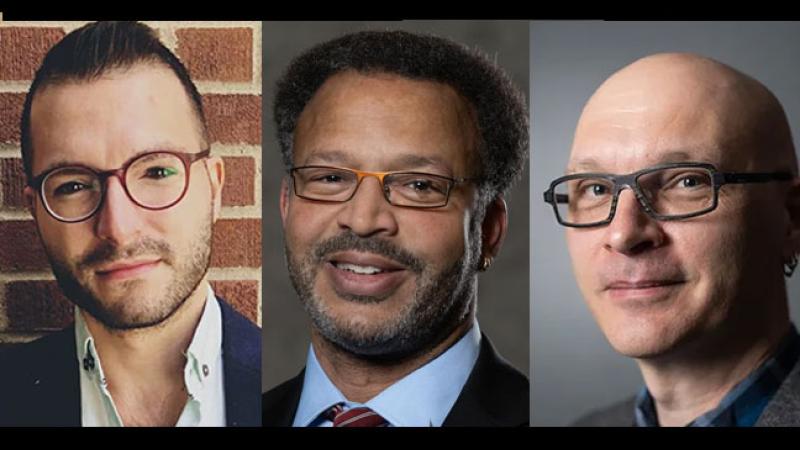
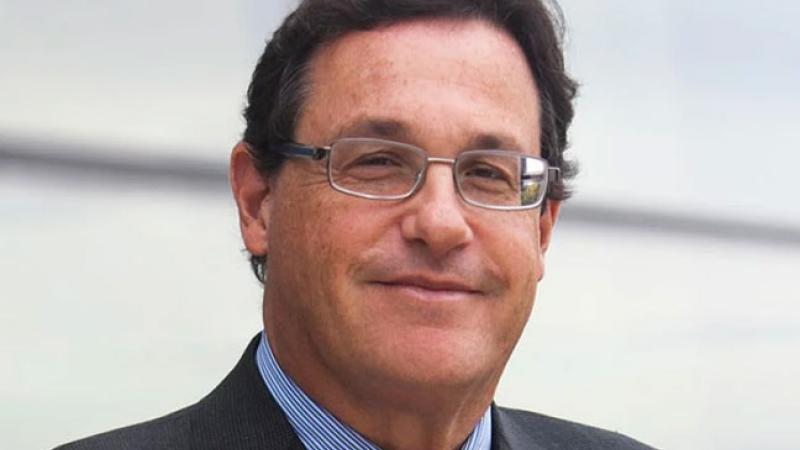
Dean Nieusma
|
In the developing world, philanthropic engineers offer
rescue by wizardry, their bag of marvels filled with technical
tricks like off-the-grid electricity fueled by scrub brush and
washing machines powered by bicycles. Technological quick-fixes
are a powerful lure, but the results will not meet the promise
until technology bows to the larger context, according to a
recent study co-authored by Rensselaer professor Dean
Nieusma.
“The challenge is to get away from the technology as the
silver bullet,” said Nieusma, an assistant professor in the
department of science and technology studies.
The current model of “engineering for development” —
development with technology at the core — promotes engineers as
unilateral leaders, concluded Nieusma and co-author Donna Riley
of Smith College, in the most recent edition of Engineering
Studies. A better model, they said, would embed engineers
into a larger team focused on policy, local context, and
education.
“We need to move away from the ‘development without borders’
model — based on medicine’s Doctors without Borders — where
engineers swoop in, build a project, and leave,” Nieusma said.
“It would be more successful to think about engineering based
on a public health model, where — instead of final ‘solutions’
— each step works to makes people’s lives better.”
Their study followed two projects — one a university-led
exchange in Nicaragua, the second a non-governmental
organization (NGO)-funded rural electricity project in Sri
Lanka — concluding that, under the current model, the enduring
benefit of engineering for development projects is actually on
the social side of the equation.
“The big outcome is that experiences like service learning
exchanges are world changing for students. And that’s
wonderful. But we need to make sure that community members
benefit even if the technology fails,” Nieusma said.
Nieusma and Riley are themselves proponents of engineering
for development, and are members of the Engineering, Social
Justice, and Peace network.
“The dominant story we hear is the front end — students are
going here to do this, a nonprofit is going to do that — and
there’s little follow-up,” Nieusma said. “Donna and I
compared notes from two very different cases, and we left with
very similar findings. We’d like to help people see the
complexity of what’s going on in these projects and the
problems of the model without being negative. We hope we can
help.”
In both cases, the projects were built around the idea of
“capacity building,” which seeks to improve a developing
region’s ability to perform a task for itself, rather than
relying on gifts from a wealthy donor nation. And yet, despite
their intentions, the authors found that the projects fell
short of their ideals.
“Our study shows that the social side of development
projects — even projects with technology at the core — is what
endures, but the technology takes center stage. That move is
damning for the project,” Nieusma said.
In Nicaragua, Riley found that the pressure for a successful
“product” overshadowed the “process” of a capacity-building
collaboration between Smith College and Grand Valley State
University in the United States, and Universidad Nacional
Autónoma de Nicaragua and Universidad Popular de Nicaragua in
Nicaragua.
The partners worked together to build capacity for the
economy in the Nicaraguan region of Estelí by improving the
product development education offered at the region’s
university campus.
The collaboration centered on a two-week product development
course in Estelí, with five students participating from each of
the four schools. The course focused on product design for
developing markets using locally available materials and
skills. Students developed product ideas including a removable
passenger seat for a bicycle, a pressurized water patio washer,
a vegetable cutter, a bicycle-powered washing machine, and a
non-electric mechanical fan.
“In both the U.S. and Nicaraguan contexts, there was a
tendency to fall back on the product over the process,” Riley
wrote. “This focus on a specific technology or product as a
measure of project success obscures the larger goals related to
capacity building, and to developing a more socially just
framework for development-oriented exchange programs.”
Additional limitations were posed by participants who were
not fully fluent in the native language, and the gulf of
difference in the economic, cultural, and educational
backgrounds of the Americans and Nicaraguans.
In Sri Lanka, Nieusma found similar setbacks foil even
experienced non-governmental aid agencies, as he followed a
project to build a wood-burning power plant in a village of
1,400 people in the southwestern district of
Monaragala.
The project was led by Energy Forum, a Sri Lankan NGO based
in Colombo, the country’s largest city. Energy Forum tries to
use appropriate renewable energy technology to bring
electricity to the half of Sri Lanka that lives “off the grid.”
Unlike the Nicaraguan project, the Energy Forum participants
were fluent in the native Sinhalese language of the village,
understood the broader importance of capacity building, and had
extensive experience working in similar settings, Nieusma
observed.
”Yet despite their attention to context and their local
knowledge, despite the balance of expertise and integrated
approach to development, technical functionality still ended up
playing a defining role in the project planning,” Nieusma
wrote.
Nieusma also discussed the limitations of local “ownership”
of the project. As a prerequisite for success, Energy Forum
controlled all aspects of the project — conceiving it, planning
it, implementing it, and managing it — even as the NGO sought
to involve the community, Nieusma said.
“The Energy Forum was not ‘for hire’ by the local community,
and the community members were in no position to make informed
decisions about the project before being introduced to it,” he
wrote.
Nieusma and Riley propose a reconsideration of the central
concept of engineering for development.
“While many of the organizations acknowledge the centrality
of interdisciplinary collaboration in their work, their naming
as Engineers without Borders, Engineers for a Sustainable
World, and Engineering World Health reinforces a disciplinary
separateness that contributed to a silo effect.”
Social justice is a powerful motivation for donors and
volunteers who contribute to philanthropic engineering projects
— engineers want to feel that they too are making a difference,
Nieusma said. But to match reality with ideals, the difference
they offer must be more than technical know-how.
|
Published
July 29,
2010 |
Contact: Mary L. Martialay
Phone: (518) 276-2146
E-mail: martim12@rpi.edu |
|