|
Rensselaer Professor Cynthia Collins Receives NSF CAREER Award
Young Faculty Researcher To Develop New
Microbial Communities for Medical and Industrial
Applications
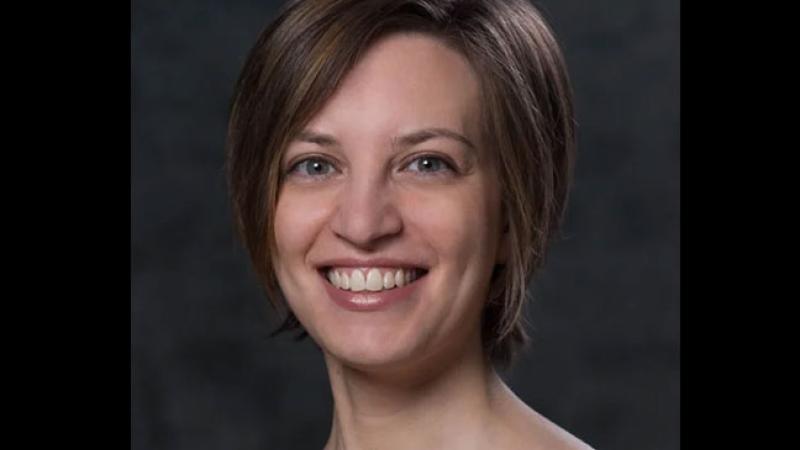
Cynthia Collins
|
Cynthia
Collins, assistant professor in the Department of Chemical and
Biological Engineering at Rensselaer Polytechnic Institute,
has won a prestigious Faculty Early Career Development Award
(CAREER) from the National Science Foundation (NSF).
Collins will use the five-year, approximately $536,000 award
to develop systems for coordinating the behaviors of microbes
in entirely new types of engineered microbial communities. In
the future, Collins envisions the use of such microbial
communities as a platform for the production of pharmaceuticals
and other important products.
“We are exceptionally proud of Dr. Collins for being named
an NSF CAREER Award recipient,” said
David Rosowsky, dean of the School of Engineering at
Rensselaer. “Cynthia is on the leading edge of biotechnology
research, and a rising star in the areas of developing of new
bioprocesses and increasing our fundamental understanding of
both beneficial and dangerous types of microbial communities.
We are thrilled that Cynthia is among the ranks of our many
impressive NSF CAREER award recipients, and we look forward to
her continued success at Rensselaer.”
Collins CAREER program, titled “Engineering Interspecies
Communication and Synthetic Microbial Consortia,” will work to
develop new biotechnology tools using specialized communities
of microorganisms that are comprised of multiple types of
microbes. Such new forms of microbial communities would have
applications for the creation of new chemicals, be used to
develop new drugs, and play a role in the removal of hazardous
materials.
“The project is focused around the concept that a community
comprised of different types of microbes can do much more than
a community comprised of a single organism,” said Collins. “By
combining different types of organisms in the same community,
you can utilize the strength of each organism to achieve
outcomes that are more than the sum of the individual
parts.”
The first step in this process is communication. As with
humans, in order to have a community of different types of
microbes work together effectively, they must be able to
communicate with each other. Collins will use this new funding
to get two very different and widely used types of microbes to
communicate with each other – Escherichia coli and
Bacillus megaterium. Such interspecies communication,
which involves the sending and receiving of chemical signals
between organisms, has never yet been achieved with these two
very different organisms.
The CAREER Award is given to faculty members at the
beginning of their academic careers and is one of the NSF’s
most competitive awards, placing emphasis on high-quality
research and novel education initiatives.
Collins joined Rensselaer in 2008 from the University of
Calgary, where she served as a postdoctoral researcher. She
received her bachelor’s degree in chemistry and biochemistry
from the University of Toronto and her doctoral degree in
biochemistry and molecular biophysics from the California
Institute of Technology. She is a member of the Center for
Biotechnology and Interdisciplinary Studies at Rensselaer.
|
Published
April 21,
2011 |
Contact: Gabrielle DeMarco
Phone: (518) 276-6542
E-mail: demarg@rpi.edu |
|