|
Rensselaer Biologists Uncover Surprising Connection Between Breast Cancer Cells and Surrounding Tissue
American Cancer Society-Funded Research Reveals
Molecule Called Cadherin-23 Could Play a Role in the Earliest
Stages of Breast Cancer
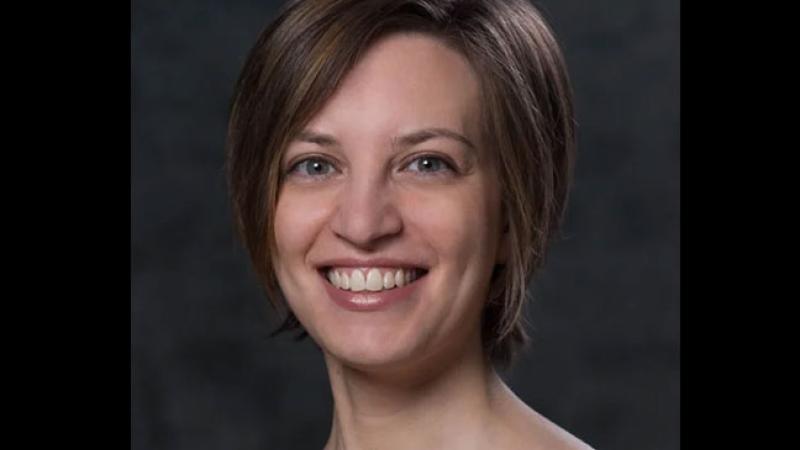
Rensselaer Polytechnic Institute Biologist
Lee Ligon has found a previously unknown connection between
breast cancer tumor cells and the surrounding healthy tissue.
The results provide new information on the earliest stages of
breast cancer metastasis.
The results were published March 7, 2012, in the journal
PLoS One, in a paper titled “
Cadherin-23 Mediates Heterotypic Cell-Cell Adhesion between
Breast Cancer Epithelial Cells and Fibroblasts.” Ligon was
joined in the research by Rensselaer doctoral student Maria
Apostolopoulou. The research was funded by the American Cancer Society.
The research shows that a specialized type of molecule
called Cadherin-23 can be found in and around breast cancer
tumors. The molecule, which had never been associated with
breast tissue or cancer, helps connect cancerous tumor cells to
its neighboring healthy tissue, called the stroma.
“Something happens once cancerous cells enter the stroma and
the cancer can very quickly become invasive,” Ligon said.
“Pathologists studying cancerous tissues have often noted that
tumor cells make contact with the cells in the stroma, but they
assumed the connections were unimportant.”
Ligon and her team sought to uncover exactly what molecules
were involved in attaching the tumor cells to the surrounding
tissue to determine if those initial points of contact play a
role in the progression of cancer through the body.
In the human breast, tumors most often originate in what are
known as epithelial tissues. These tissues are made up of a
specialized type of cell called epithelial cells. Epithelial
cells line the interior of many structures and organs within
the human body. In the breast, they line the interior of milk
ducts. When epithelial cells start to divide uncontrollably,
they eventually break out of the duct and literally spill into
the surround tissue or stroma. The stroma is comprised of cells
called fibroblasts and extracellular material such as collagen
fibers. In many cases, the invading cancerous epithelial cells
will glom onto nearby fibroblasts in the stroma.
Ligon and Apostolopoulou worked to pick apart how the
epithelial cells attached themselves to the fibroblasts. One of
the primary tools the body uses to glue cells together is a
family of molecules called cadherins. In the human genome there
are over 80 different cadherin family members. In most cases,
cadherins stick two cells of the same type together. In the
case of the breast cancer tumor cells and fibroblasts, two very
different cells were sticking together. Ligon sought to
determine which cadherins were involved in this odd
interaction.
At first, their findings were not surprising. They found
cadherins associated with epithelial cells as well as cadherins
associated with fibroblasts. It was the discovery of the highly
specialized and unusual cadherin, Cadherin-23, that really
surprised them, according to Ligon.
“Cadherin-23 has never before been associated with cancer,”
Ligon said. “In fact, it has previously only been shown in the
sophisticated inner workings of the ear and retina.”
It is still largely unknown what happens once the cells have
made a connection, but the appearance of Cadherin-23 in
elevated levels in cancerous tissues suggests that it might
play a real role in the earliest stages of metastasis,
according to Ligon. Cadherin-23 is a new and potentially very
important new component in the progression of cancer for
scientists to investigate, she said.
Ligon is a member of the Center for Biotechnology and
Interdisciplinary Studies and the Department of Biology
at Rensselaer.
|
Published
March 14,
2012 |
Contact: Gabrielle DeMarco
Phone: (518) 276-6542
E-mail: demarg@rpi.edu |
|