|
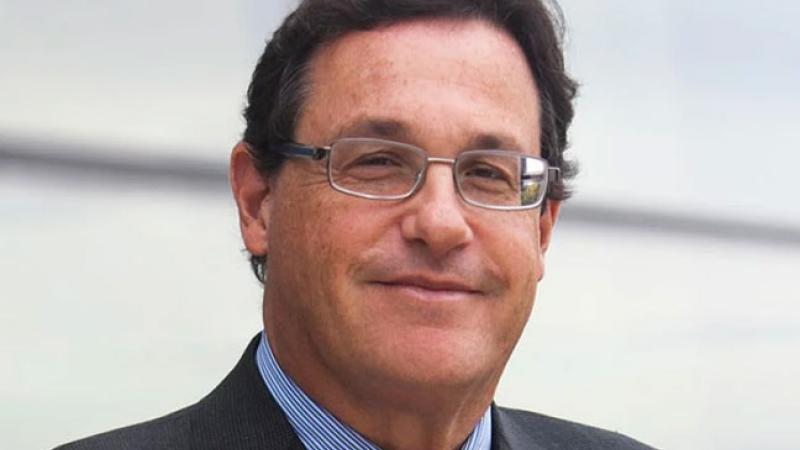
Rensselaer Professor Xavier Intes Receives NSF CAREER Award
Biomedical Engineering Expert To Advance
Promising Non-Invasive Medical Imaging Technique for
Identifying and Fighting Cancer
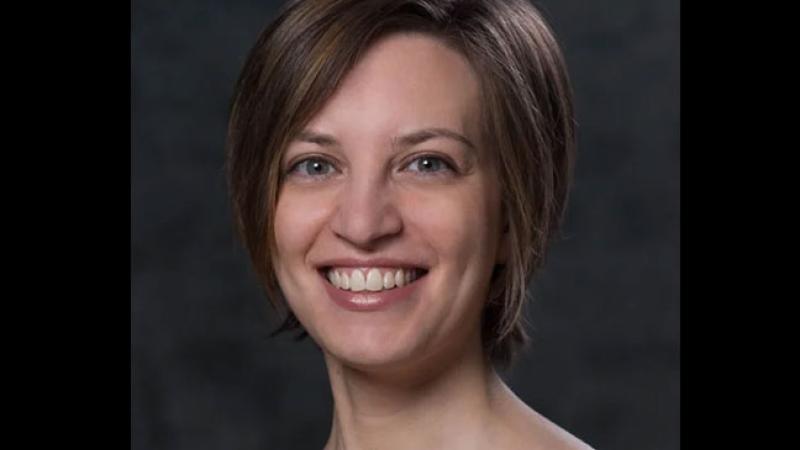
Xavier Intes, assistant professor in the Department of Biomedical
Engineering at Rensselaer Polytechnic
Institute, has won a prestigious Faculty Early Career
Development Award (CAREER) from the National Science Foundation
(NSF).
Intes will use the five-year, $400,000 award to further his
research into a promising non-invasive biomedical imaging
technique to help identify and treat cancerous tumors. The
CAREER Award is given to faculty members at the beginning of
their academic careers and is one of NSF’s most competitive
awards, placing emphasis on high-quality research and novel
education initiatives.
“We congratulate Xavier for receiving the NSF CAREER Award
in recognition of his potential as a young researcher at
Rensselaer,” said
David Rosowsky, dean of the School of Engineering at
Rensselaer. “Dr. Intes and his students are working on
leading-edge optical molecular imaging techniques, and we look
forward to their new findings and discoveries in the coming
years. Xavier joins a growing list of NSF CAREER Award
recipients in the School of Engineering. We are enormously
proud to count him among this impressive group of faculty.”
With his research, Intes seeks to exploit optical imaging
technologies and equip physicians and researchers with new
tools in the fight against cancer. Leveraging the power of
these optical imaging and spectroscopy systems could expand our
ability to screen for diseases, detect diseases earlier, and
lead to more accurate diagnoses, safer therapy, and better
monitoring of the healing process. One of Intes’ long-term
research goals is to advance Forster Resonance Energy Transfer
(FRET) as a robust, 3-D imaging platform for in vivo
profiling of tumors and to devise individualized therapeutic
regimen. Used in microscopy and spectroscopy, FRET is a
non-invasive, non-radioactive optical technique to observe
protein interactions at the nanoscale. Currently, FRET
applications are limited to observing interactions in cell
cultures or Petri dish environments.
With his CAREER project, titled “Whole-Body FRET
Tomography,” Intes will adapt FRET to observe protein
interactions in live animals. This is an important step, Intes
said, in order to better see if experimental cancer drugs are
working. Many new drugs are designed to actively seek out a
tumor inside the body, and FRET is an easy, non-invasive,
harmless means to detect whether the drug successfully located
and interacted with the tumor. The new FRET optical system uses
light to sense and quantify biomarker recognition and create
3-D visual images of drug distribution and interaction in the
live animals.
Prior to joining the Rensselaer faculty in 2007, Intes
conducted research into biophotonics and biomedical
instrumentation as chief scientist at Advanced Research
Technologies in Montreal. He is a member of the Optical Society
of America and the International Society of Biomedical Imaging.
Intes serves as an active reviewer of numerous science and
engineering journals, was the editor of the 2008 book
Translational Multimodality Optical Imaging, and has
published more than 40 papers in leading international
journals. Additionally, Intes chairs the Multimodal Biomedical
Imaging international conference held annually in San Jose,
Calif.
At Rensselaer, Intes is a member of the Center for Biotechnology and
Interdisciplinary Studies, Center for Engineering-based
Patient Modeling, Center for Modeling, Simulation
and Imaging in Medicine, and Scientific Computation
Research Center.
In addition to the NSF, Intes receives research funding from
the National Cancer Institute and the National Institute of
Biomedical Imaging and Bioengineering.
Intes received bachelor’s, master’s, and doctoral degrees in
physics from the Universite de Bretagne Occidentale in
France.
For additional information on Intes’ research at Rensselaer,
visit:
For more information on biomedical engineering at
Rensselaer, visit:
|
Published
April 11,
2012 |
Contact: Michael Mullaney
Phone: (518) 276-6161
E-mail: mullam@rpi.edu |
|