|
Sensing Environments Rensselaer Research Celebrates Earth Day
April 14-21 Festival Presents Sustainability
Research in Arts, Sciences, and Humanities
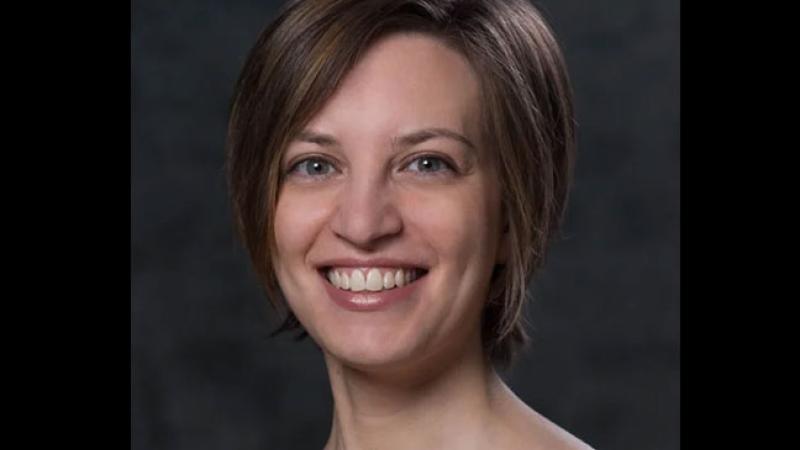
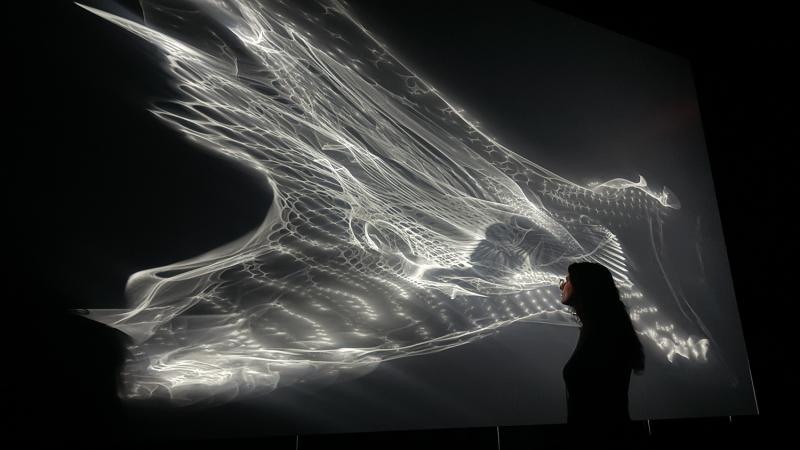
Pictured Susie Ibarra, Photo Credit:
Tony Cenicola
|
Rensselaer Polytechnic Institute will celebrate the
countdown to Earth Day with a weeklong festival of
performances, lectures, films, exhibits, and workshops centered
on environmental sustainability. The
Sensing Environments festival will present daily events
from April 14 to April 21. All events are free and open to the
public.
“There’s a really nice energy that, in the past few years,
has grown around sustainability-focused research on campus,”
said Kim
Fortun, professor of Science and Technology
Studies, and chairwoman of the Rensselaer Excellence in
Interdisciplinary Sustainability Studies Task Force, which is
organizing the festival in cooperation with the Rensselaer
Department of the Arts. “The festival is a way for us to
celebrate and build upon that energy, and it’s also an
opportunity to share our work with the community, offering a
sample of what researchers from diverse academic backgrounds
can bring to the ongoing discussion about sustainability and
its challenges.”
More than 30 events are planned throughout the week,
culminating on Sunday, April 21, the day prior to Earth Day,
with a musical procession from Prospect Park in Troy to the
concert hall of the Curtis R. Priem Experimental Media and
Performing Arts Center (EMPAC) on the Rensselaer campus, for a
world drumming performance, newly composed by Susie Ibarra and inspired
by the theme of the festival.
The festival spotlights renowned experts from the Rensselaer
faculty as well as leading figures in the arts and sciences
internationally. Visiting speakers include Gavin Schmidt,
climate modeler and deputy chief at the NASA Goddard Institute
for Space Studies in New York City, and David Dunn, a composer,
environmentalist, and director of the Art & Science
Laboratory in Santa Fe. Participating Rensselaer faculty will
include Igor Vamos, associate professor in the Rensselaer Arts
Department, known as “Mike Bonnano” in his media arts work with
“The Yes Men”; Mimi Katz, an assistant professor of Earth and
Environmental Sciences whose research focuses on the history of
Earth’s climate; and Pauline Oliveros, a distinguished research
professor, founder of the “Deep Listening” movement, and 2012
winner of the John Cage Prize.
Some highlights of the week’s events:
Talk: Mimi Katz, “Lessons from Ancient Oceans &
Climate Changes,” Tuesday, April 16, 3-4 p.m., Center
for Biotechnology and Interdisciplinary Studies (CBIS)
Auditorium. Katz will discuss her efforts to use ancient,
deep-sea fossils to reconstruct
the history of the Earth’s climate, and her research at sea
through the Integrated Ocean Drilling Program.
Film & Discussion: “Garbage
Warrior and the Challenge of Green
Building,” Thursday, April 18, 10 a.m.-noon,
Rensselaer Union. A film about renegade architect Michael
Reynolds and his “green disciples,” advancing the art of
passive, solar, off-the-grid, sustainable housing.
Talk: Gavin
Schmidt, “What Are Climate Models Good
For?” Friday, April 19, 4-6 p.m., EMPAC Concert Hall.
Schmidt will look at current climate models, how they have
performed so far, the challenges they face, and their current
limitations (made possible by the Vollmer W. Fries Lecture
Series).
Panel: “Updates on Shale Gas Research: A Systems
Approach,” Saturday, April 20, 10:30 a.m.-12:30 p.m.,
EMPAC Studio 2. This panel discussion will provide an
opportunity to share and deliberate on recent research on shale
gas development, and implications for New York state and
national policy.
Talk: David
Dunn, “Sonic Interventions Into Hidden
Sound Worlds: A Composer at the Edge of Science,”
Saturday, April 20, 4-6 p.m., EMPAC Studio 2. Dunn will discuss
his collaborations with scientists to make sonic art that moves
from documentation and aesthetics, to applied environmental
problem solving.
Concert: Susie
Ibarra, “Circadian Rhythms,”
Sunday, April 21, 5-6 p.m., EMPAC Concert Hall. “Circadian
Rhythms,” composed and conducted by Ibarra as a tribute to
Earth Day, is inspired by the built-in biological rhythms in
plants, animals, birds, insects, and bacteria that oscillate,
repeat, and change with patterns of movement, migration, birth,
and sleep. The composition features a surround soundscape of
animal and bird recordings from the Macaulay Library of
Cornell.
For a full schedule of events, visit:
http://sustainabilityresearch.wp.rpi.edu/earth-week-research-and-arts-festival/schedule/
“We hope the larger community will join us to learn about
research and discussion under way at Rensselaer, addressing
issues of enormous public concern,” Fortun said. “We have, for
example, a group of material scientists who are working on
designing alternatives to natural resources that are scarce, or
environmentally destructive to obtain. They are serious basic
scientists, but they’re motivated by and engaged with broad
questions about the material infrastructure for a sustainable
society.”
Kathy High, associate professor of arts and an organizer of
the event, said artists presenting during the festival have a
long commitment to working with biology, environmental issues,
climactic issues, and how art can help us understand and
rethink how we interact with the Earth.
“This is an inspiring group of people and they can help us
think about how we can create our own interventions through
artistic practice,” said High.
Michael Century, professor of arts and an organizer, said
“the confluence of musical talents, from throughout the Capital
Region and beyond, and ranging across the diversity of the
world’s musical styles, will create a thrilling finale for the
festival.”
The festival is a joint initiative of the Rensselaer
Excellence in Interdisciplinary Sustainability Studies Task
Force and the Department of the Arts. Sponsors of the events
include the Bank of America, New York State Council of the
Arts, the Rensselaer Office of the President, the Jaffe Fund
for Experimental Media and Performing Arts, and the Rensselaer
School of Humanities, Arts, and Social Sciences.
|
Published
March 19,
2013 |
Contact: Mary L. Martialay
Phone: (518) 276-2146
E-mail: martim12@rpi.edu |
|