|
Rensselaer Joins 14 Universities Across the U.S. To Form Earthquake Engineering Consortium
TROY, N.Y. — Rensselaer Polytechnic Institute joined
14 other universities in the U.S. today to mark the formation
of the George E. Brown, Jr. Network for Earthquake Engineering
Simulation (NEES) funded by the National Science Foundation
(NSF). The consortium of research centers is connected via a
high-performance Internet network designed to shift the
emphasis of earthquake engineering research and education from
traditional physical testing to integrated experimentation and
model-based simulation.
Rensselaer kicked off the completion of its facility upgrade
and the beginning of this new phase of the research partnership
by hosting a tour of its facility — the Geotechnical Centrifuge
Research Center — located in the J. Erik Jonsson
Engineering Center.
Rensselaer’s facilities include an upgraded geotechnical
centrifuge, several labs, as well as a state-of-the-art
computer operations center and teleconferencing room where the
consortium will interact in real-time and perform integrated
research via the NEES network called the NEESgrid. The
facility upgrades were funded through NSF grants totaling more
than $3 million. Rensselaer will receive an additional $4.5
million in NSF funding over the next five years to support
operations and shared use of the facility. Rensselaer invested
$150,000 for renovations of the center and has committed an
additional $500,000 over the next 10 years for operational
expenses.
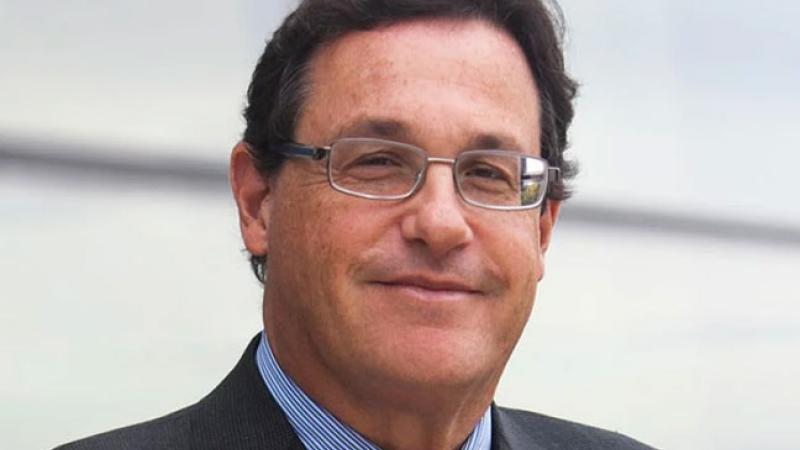
“Rensselaer will be a node on the NEESgrid, sharing
resources with other sites while participating in remote
observation, and even remote operation, of experiments.
The collaborative research will help lead to better, safer, and
more economical designs for our country’s infrastructure, while
creating a national resource for earthquake research and
education,” said Ricardo Dobry, director of the Geotechnical
Centrifuge Research Center and professor of civil and
environmental engineering at Rensselaer.
Rensselaer’s key piece of earthquake engineering equipment
is its 150 g-ton geotechnical centrifuge. Researchers use the
centrifuge for physical earthquake response simulation of soil
and soil-structure systems such as earth dams, embankments,
foundations of buildings and bridges, buried pipes, and
retaining walls. The centrifuge spins small-scale models of
these systems to produce a force of up to 200 times the earth’s
gravitational pull, mimicking the stresses present in the
actual large-scale constructed systems with dimensions 50 to
100 times larger. The centrifuge is equipped with an in-flight
robot designed to conduct operations, like construction, while
the centrifuge is in motion. Models can be subjected to extreme
events, including failures — conditions practically impossible
to duplicate with full-scale structures, according to
Dobry.
Applications for Rensselaer’s earthquake research include
the development of seismic code requirements and seismic
guidelines for buildings, bridges, and other structures, said
Dobry.
In addition to Dobry, key faculty associated with
Rensselaer’s Geotechnical Centrifuge Research Center include
Tarek Abdoun, associate director of the Geotechnical Centrifuge
Research Center and assistant professor of civil and
environmental engineering at Rensselaer; Mourad Zeghal,
assistant professor of civil and environmental
engineering at Rensselaer; and Thomas Zimmie, professor of
civil and environmental engineering at Rensselaer. Other
faculty associated with Rensselaer’s NEES operation and
NEES-related research are Michael O’Rourke, professor of civil
and environmental engineering, and Michael Symans, associate
professor of civil and environmental engineering.
Rensselaer’s partners showcased their work today at a
national briefing held at NSF headquarters in Arlington, Va.,
marking the beginning of operational funding for the NEES
project, which runs through 2014.
About NEES
NEES is a national, networked, simulation resource that
includes geographically distributed, shared-use,
next-generation experimental research equipment sites built and
operated to advance earthquake engineering research and
education through collaborative and integrated experimentation,
theory, data archiving, and model-based simulation. The goal of
NEES is to accelerate progress in earthquake engineering
research and to improve the seismic design and performance of
civil and mechanical infrastructure systems through the
integration of people, ideas, and tools in a collaborative
environment. Open access to and use of NEES research facilities
and data by all elements of the earthquake engineering
community is a key element of this goal. The NEES Consortium
manages NEES as a national shared-use research facility for the
earthquake engineering community.
|
Published
November 15,
2004 |
Contact: Mary Cimo
Phone: (518) 687-7174
E-mail: cimom@rpi.edu |
|