Summit Explores Innovation
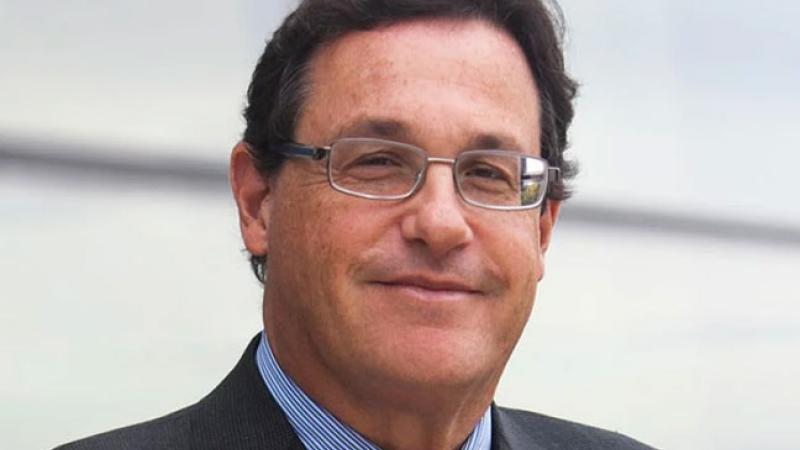
Biotechnology panelists Wolf von
Maltzahn (Rensselaer), Thomas D’Ambra (Albany Molecular),
and Lawrence Sturman (Wadsworth Center).
|
Policy makers, industry leaders, and representatives from
regional technological industries met at Rensselaer for a
two-day National Innovation Initiative (NII) Regional Summit
Sept. 7-8, sponsored by the Council on Competitiveness.
A national organization of corporate, academic, and labor
leaders, the Council on Competitiveness was formed 16 years ago
with the intention of developing a workable economic framework
for keeping America competitive in the global market, and for
fostering innovation.
The NII is the council’s yearlong effort of nearly 20 CEOs
and university presidents — and more than 400 other innovation
stakeholders and thought leaders across the country — to
develop a strategic and actionable 21st-century innovation
agenda for the United States.
Rensselaer’s regional summit was one of only a few being
held across the country in preparation for the council’s final
report to be unveiled at a National Innovation Summit Dec. 15
in Washington, D.C.
Many components of innovation were explored during the
two-day summit, by speakers that included U.S. Department of
Commerce Assistant Secretary David Sampson; Congressman Michael
McNulty; IBM CEO and Chair Samuel Palmisano; New York State
Senate Majority Leader Joseph Bruno; Debra Wince-Smith,
president of the Council on Competitiveness; Kelly Lovell,
president of the Center for Economic Growth, and Charles
Gargano, chairman and CEO of Empire State Development
Corporation. MapInfo Corporation Chairman John Cavalier and
Wolf von Maltzahn, acting vice president of research at
Rensselaer, also moderated panel discussions.
“While national policies create the critical, basic
environment for innovation and competition, it is often at the
local and regional level where firms, universities,
laboratories, and entrepreneurs interact most closely to drive
innovation. We had to go to the regions to really understand
what was occurring,” said Wince-Smith. “This summit is shaping
the national debate and the national agenda.”
Summit participants discussed how to attract and keep
talent, venture capital investment strategies, the need for
funding basic research, national business policies that would
foster innovation, and the importance of collaboration between
academia, industry, and government.
“The United States must prepare for a new wave of
innovation,” said IBM’s Palmisano. “Where once we fine-tuned
our organizations for efficiency and quality, now we must
optimize our entire society for innovation.”
IBM Chairman Samuel Palmisano and
President Shirley Ann Jackson at the Council on
Competitiveness regional summit at Rensselaer.
|
Panelists also concluded that to grow a more skilled,
adaptable work force, retooling the K-12 educational system to
teach students new skills needed in today’s work place is
crucial. Students today and in the future will need to be
adaptable, creative, and technologically savvy; students will
need to be problem solvers, work well in groups, be highly
productive, and have a commitment to long-term learning, the
panelists concluded.
David Sampson, of the U.S. Department of Commerce, said,
“The convergence of various technologies now and into the
future in nanotech, biotech, IT, and cognitive technology will
create new opportunities and new industries...The question we
now face is how to connect knowledge creators with knowledge
commercializers.”
Panelists stressed the importance of collaboration between
the scientists and researchers who develop new technologies and
processes, and the people in commercial industries who can take
an idea and turn it into a marketable product.
“The unique and precious attributes of discovery and
innovation are critical components in the formula for continued
prosperity in an advanced economy,” said President Jackson, a
principal of the NII, at the conclusion of the summit. “To
sustain a continually rising standard of living, we must find
the ways to boost growth and sustain long-term productivity.
While innovation is critical to our prosperity, it also is
innately valuable globally. Innovation has a multiplier effect,
building markets, creating jobs, improving health, lifting
hopes. It is this to which the world looks with anticipation
and hope.”
Photos by Kris Qua
Originally published in
Rensselaer Magazine, Winter 2004
Published
December 1,
2004
|