January 16, 2026
Rensselaer Polytechnic Institute has secured $1 million to establish a state-of-the-art manufacturing laboratory that will transform industrial hemp into construction materials, textiles, and packaging, part of a broader effort to position New York state as a leader in sustainable biomanufacturing.
The funding, awarded to RPI's Seed to City Initiative as part of a $5 million New York State Department of Agriculture and Markets investment, comes as governments and industries seek alternatives to carbon-intensive materials. Industrial hemp, which is one of the fastest-growing and most efficient carbon-capturing crops, offers a promising solution.
"Seed to City is about turning plants into buildings," said Alexandros Tsamis, Ph.D., director of RPI's Center for Architecture Science and Ecology, who leads the initiative with Daniel Walczyk, Ph.D., of RPI's New York Fashion Innovation Center.
“Right now, the construction industry is one of the biggest contributors to carbon emissions, and people are asking for cleaner, healthier, low‑carbon ways to build,” Tsamis explained. “But the supply chain for renewable materials doesn’t exist at scale yet. Seed to City is designed to fill that gap.”
The new Seed to City Manufacturing Lab will house specialized equipment, designed to convert hemp fibers into high-performance materials that can compete with conventional building products and plastics. The lab represents a critical link in New York's emerging hemp supply chain, focusing on downstream manufacturing.
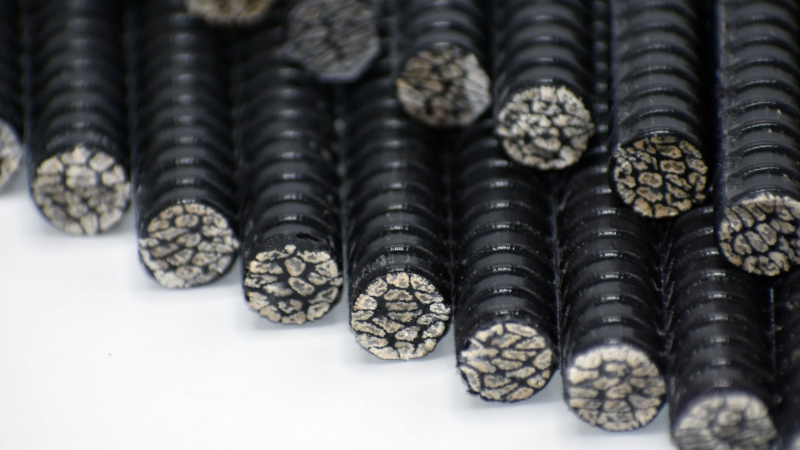
“Once operational, we’ll begin developing renewable material components such as structural blocks, natural‑fiber rebar, insulated retrofit panels, and next‑generation siding — materials the industry needs but currently sources from carbon‑intensive processes,” Tsamis said.
While hemp cultivation has expanded rapidly since the passage of the 2018 Farm Bill, industrial hemp production has struggled to scale, with limited processing infrastructure and uncertain markets hampering growth.
The initiative aims to bridge that gap by developing manufacturing processes, creating demonstration products, and working with emerging New York hemp companies to identify market opportunities. The researchers envision hemp-based materials eventually flowing into construction projects across the state, creating what they call a "plant-based circular economy."
By establishing regional supply chains for renewable materials, the initiative could help reduce New York's dependence on imported, carbon-intensive products while creating jobs in rural communities where hemp farming is concentrated.
“New York State is uniquely positioned to lead a circular bioeconomy around hemp,” Walczyk said, “with farmers ready to grow, universities advancing R&D, startups producing feedstocks and products, and the nation’s largest concentration of architects and builders.”