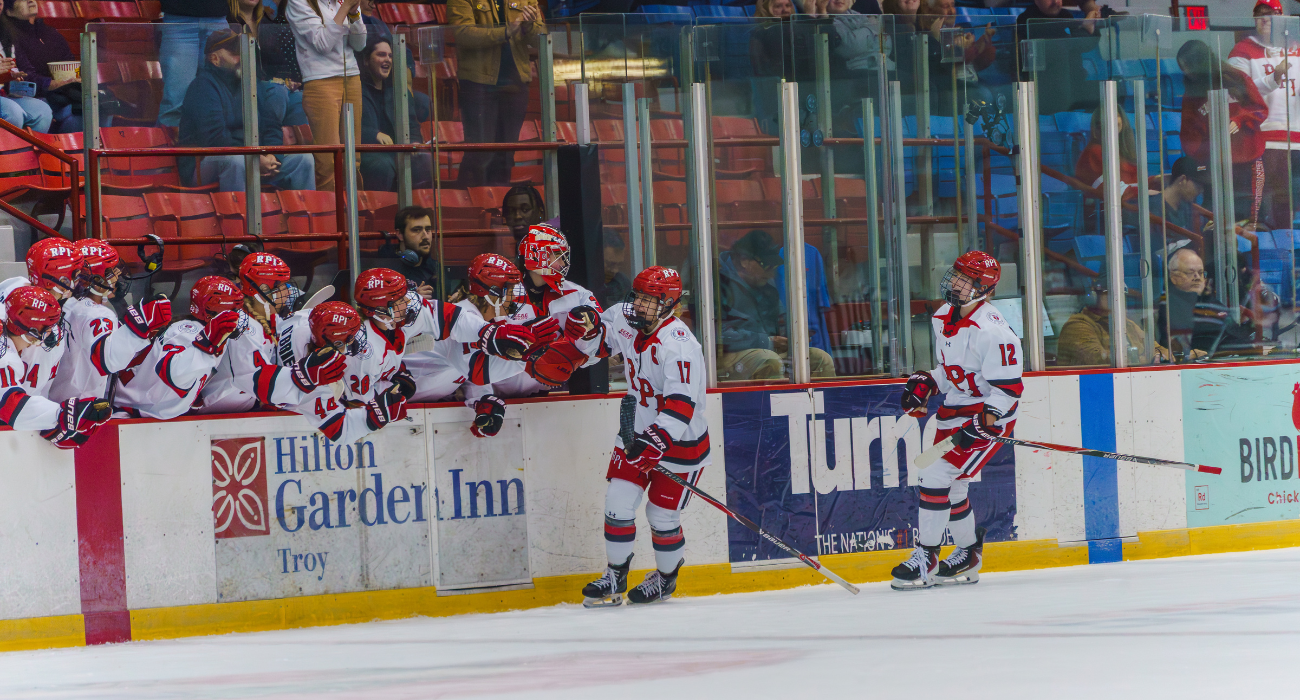
How RPI’s Nina Christof ‘26 made it to the 2026 Winter Olympics while pursuing a computer science degree
January 26, 2026
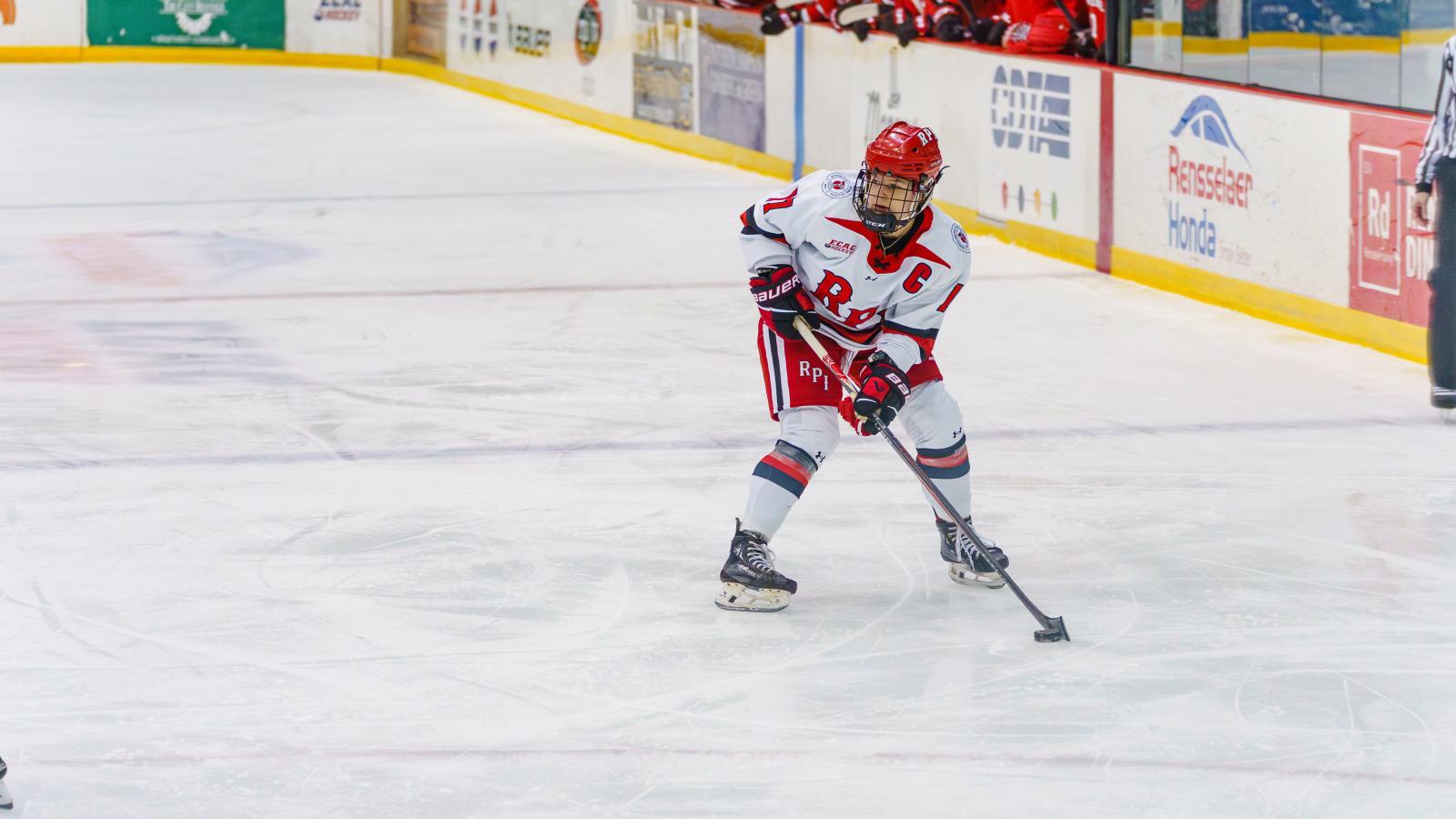
Nina Christof knew from a young age that she wanted to be an Olympian. To get there, she had to work hard and give it her all, but she also had to learn when to pause and take care of herself. When she competes for Team Germany in Women’s Ice Hockey next month, it will reflect not just her talent and dedication, but the perspective and balance she developed along the way.
Christof’s path in hockey began in Germany, where she played on boys’ teams due to a lack of young girls’ teams. Years later, when it came time to choose a college, she chose RPI so she could continue playing hockey at a high level while earning a rigorous STEM degree, without having to sacrifice one for the other.
As captain of the RPI women’s hockey team and a computer science major, Christof had to learn how to excel both in hockey and her rigorous studies. Like many students and athletes, she pushed through late nights and stretches of burnout. Through challenges faced and lessons learned, she realized that achieving her goals required balance, so she developed 5 personal rules, which have now led her to the Olympic ice.
- Be where your feet are.
“On the ice I focus on hockey, at school I focus on work, at home I focus on family. I try to never bring schoolwork home. I know it won’t help me in the long run.”
Like many ambitious students and athletes, Nina pushed herself to keep up with everything, doing what she thought was necessary to make it work. She’d try to squeeze in homework in the lounge before practice, think about assignments during games, or run through plays during class. She was doing it all, but she was left feeling both unfulfilled and stretched too thin. She learned that if she really wanted to thrive in the areas of life most important to her, she needed to allow herself to be fully present in each moment.
- Prioritize sleep — no work after 11pm.
“I learned this the hard way. I used to go to bed at 5am doing homework for my hard classes like Data Structures — I thought that’s what it was to be a good student athlete. But then the next day I was exhausted at practice and when doing my schoolwork, I knew something had to change.”
Christof learned that sustained excellence requires self-care, including sleep. She realized that you could do much more meaningful work during the day if you allowed yourself to rest at night. “There is a misconception that if you set boundaries and do things like go to bed instead of studying more, that you’re not committed. It’s the opposite.”
- Find meaning in more than one aspect of life.
"Hockey used to be my life. When you live that way, a bad game can really get you down. I had to learn that I am more than a hockey player."
At one point in high school, Christof almost stepped away from hockey after feeling that she had accomplished everything she set out to do. She realized that her identity couldn’t live entirely in one sport. Making time for friends, family, academics, and her faith gave her perspective and renewed energy, allowing her to return to hockey with more focus and appreciation for the game.
- Do not equate self-worth with points scored.
"Society will try to deem your worth based on goals or points. It’s important that you play because you love the sport — that’s when you’ll actually perform your best."
Focusing less on stats and more on the experience of playing has changed how Christof competes. With fewer self-imposed expectations, she’s able to stay present and trust her instincts during games. That shift in perspective has translated into a more confident and consistent performance
- Just because something is hard, doesn’t mean it’s bad.
“You can’t learn resilience until you face hard times.”
Christof has faced plenty of challenges, from moving between countries to balancing elite athletics with a demanding major. She’s learned that difficulty doesn’t equal failure. Hard experiences often lead to growth, resilience, and ultimately, success.