Featuring materials from George Washington, Philip Schuyler, James Van Rensselaer, and more, offering fresh insights into Revolutionary-era New York
July 1, 2026
Rare Materials Rediscovered
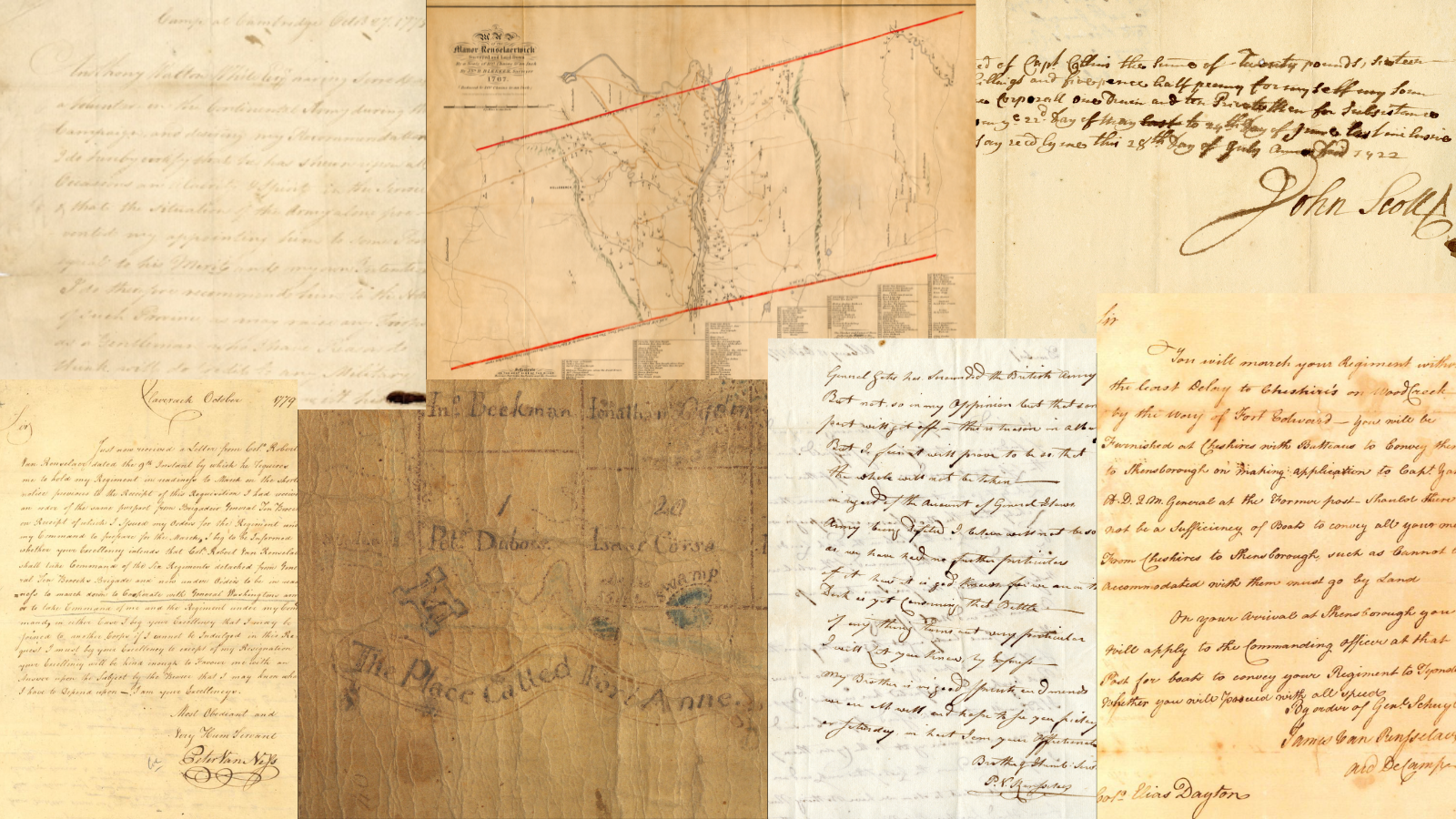
RPI’s Institute Archives and Special Collections (IASC) has rediscovered archival documents from the American Revolution, including a letter from George Washington, information about the founding of New York state, and other primary sources from the era. The materials are now available to view through a free virtual exhibit, At a Fearsome Cost: 18th Century New York and the Revolution, created by Matthew Gołębiewski, archivist at IASC. The exhibit launches as the nation commemorates the 250th anniversary of the Declaration of Independence, offering visitors a firsthand look at the people and events behind the Revolution.
Archives Opened to the Public
Built through ArcGIS StoryMaps, At a Fearsome Cost brings the manuscripts out of the archives and into public view. Viewers can see and interact with the original documents, maps, and images, learning the significance of each one. The materials are also available in an IASC digital collection.
The exhibit draws primarily from the estate of Isadore M. Fixman, a former RPI trustee and collector of early New York manuscripts. Included are the papers of the Collins, Schuyler, and Van Rensselaer families, all collected by Fixman.
While some of these materials have been referenced in prior scholarship, this exhibit marks the first time they have been collectively curated, contextualized, and made broadly accessible through an interactive digital platform.
New York at the Center of the Revolution
At a Fearsome Cost highlights New York's pivotal and often overlooked role in the Revolutionary War, from the Battle of Saratoga and a forgotten civil war in the Mohawk Valley to dozens of lesser-known battles that kept New York in the war until its very end.
These stories are told through primary sources including a 1722 military receipt from Fort Hunter, a 1776 order from Philip Schuyler directing reinforcements to Fort Ticonderoga, and a recommendation letter in which George Washington wrote for an aide-de-camp to seek a commission elsewhere, after privately writing, “I can derive no earthly assistance from such a Man.”
War up Close
Visitors of the exhibit can also experience the more personal aspects of war — letters certifying wounds and service (a precursor to the pension claim), an officer's private contempt for another, a letter written after Saratoga wondering if the enemy had truly been stopped.
“These materials give us a firsthand view of the Revolution as it was actually lived here in this region – the logistics, the fear, the fighting, and the cost,” said Gołębiewski. “We're right in the middle of this history in the Capital District, and it felt important to bring these materials to the public.”
Celebrating America’s 250th Anniversary
At a Fearsome Cost launches as the nation marks the 250th anniversary of the signing of the Declaration of Independence. As the country comes together to celebrate this milestone, the exhibit reminds visitors that independence was won not only through famous battles and leaders, but through the sacrifices, uncertainties, and lived experiences preserved in these documents.
Access to these materials is managed by the Institute Archives and Special Collections in accordance with established research policies. Research inquiries must be submitted through the Archives Reference and Research Submission Form. For media inquiries, please email quinoj5@rpi.edu.