New Professor will begin September 1, bringing CEPM expertise at the intersection of neuroscience, immunology, and translational research
July 9, 2026
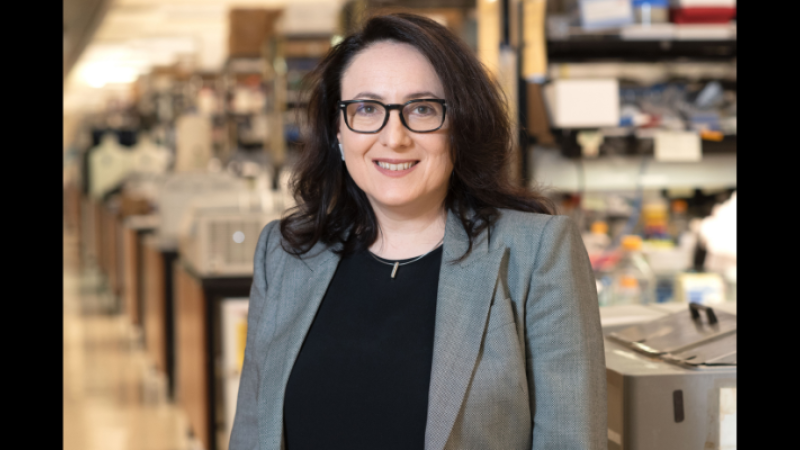
Rensselaer Polytechnic Institute (RPI) has appointed globally renowned neuroscientist Katerina Akassoglou, Ph.D., as the Tissue Engineering and Regenerative Medicine Constellation Chair in the Center for Engineering and Precision Medicine (CEPM) — a joint initiative between RPI and Ichan School of Medicine at Mt Sinai — effective September 1. Akassoglou will also join the faculty of both RPI’s School of Science and the Icahn School of Medicine.
Akassoglou joins CEPM from Gladstone Institutes and the University of California, San Francisco, where she is currently a Professor of Neurology and a senior investigator, founder, and director of the Gladstone-UCSF Center for Neurovascular Brain Immunology. A pioneer in neurovascular brain immunology and translational neuroscience, Akassoglou's appointment strengthens CEPM’s mission to unite engineering, computational science, quantum technologies, and precision medicine to transform the diagnosis and treatment of complex diseases.
“The greatest opportunities for discovery emerge when scientists from different disciplines come together to solve challenging problems,” said Akassoglou. “CEPM’s and RPI's commitment to bridging engineering, computing, quantum technologies, and medicine creates a unique environment to transform scientific discovery and improve human health. I'm excited to contribute to that mission and develop new ways to interrogate complex biological systems, uncover disease mechanisms, and accelerate the discovery of more precise therapies to address some of the most pressing challenges in neurological diseases."
Akassoglou’s work has fundamentally reshaped our understanding of how interactions among the brain, blood vessels, and immune system influence brain health and disease. Over the past two decades, she has pioneered the emerging field of neurovascular brain immunology by revealing that blood proteins that leak into the brain can trigger damaging inflammation, neurodegeneration, and impaired tissue repair. Her laboratory’s discoveries established the blood-brain-immune interface as a critical therapeutic target and led to the development of a first-in-class therapeutic approach targeting the blood clotting protein fibrin to selectively block harmful inflammation currently tested in clinical trials. This work has opened promising therapeutic pathways for diseases including multiple sclerosis and Alzheimer's disease.
In her new role, Akassoglou will collaborate with RPI’s engineers, AI researchers, and computational and quantum scientists, alongside Mount Sinai’s physician scientists and clinical investigators, to combine groundbreaking research with teaching and mentorship and lead the next generation of advances in neuroscience and regenerative medicine.
"Katerina's work has changed the way we think about neurological diseases and opened entirely new possibilities for developing treatments," said Deepak Vashishth, director of CEPM. "Her innovative research has revealed fundamental mechanisms in neuroimmunology and new therapeutic opportunities for some of the most challenging brain disorders. Her leadership will further strengthen CEPM's interdisciplinary research and its translation in regenerative medicine and precision health."
Akassoglou’s appointment also marks her return to New York City, where she completed postdoctoral fellowships at Rockefeller University and New York University before launching an independent research career that established her as one of the world's leading neuroscientists.
Her work has received several prestigious awards including the Presidential Early Career Award for Scientists and Engineers, the highest honor bestowed by the US government on outstanding scientists and engineers beginning their independent careers, and the Barancik Prize for Innovation in Multiple Sclerosis Research. Akassoglou is also a fellow of the American Association for the Advancement of Science, the National Academy of Inventors, and the American Neurological Association.
A hallmark of Akassoglou’s career has been her commitment to translating fundamental discoveries into therapies. Akassoglou is the scientific founder of two biotechnology companies, including Therini Bio, which is advancing novel therapeutics based on discoveries from her laboratory for neurodegenerative and other diseases. Her entrepreneurial leadership reflects a longstanding commitment to moving promising scientific breakthroughs beyond the laboratory and toward patients. At CEPM, her leadership will further strengthen the center’s growing research community and its efforts to advance human health.