New facility features advanced equipment for hands-on student learning
May 4, 2026
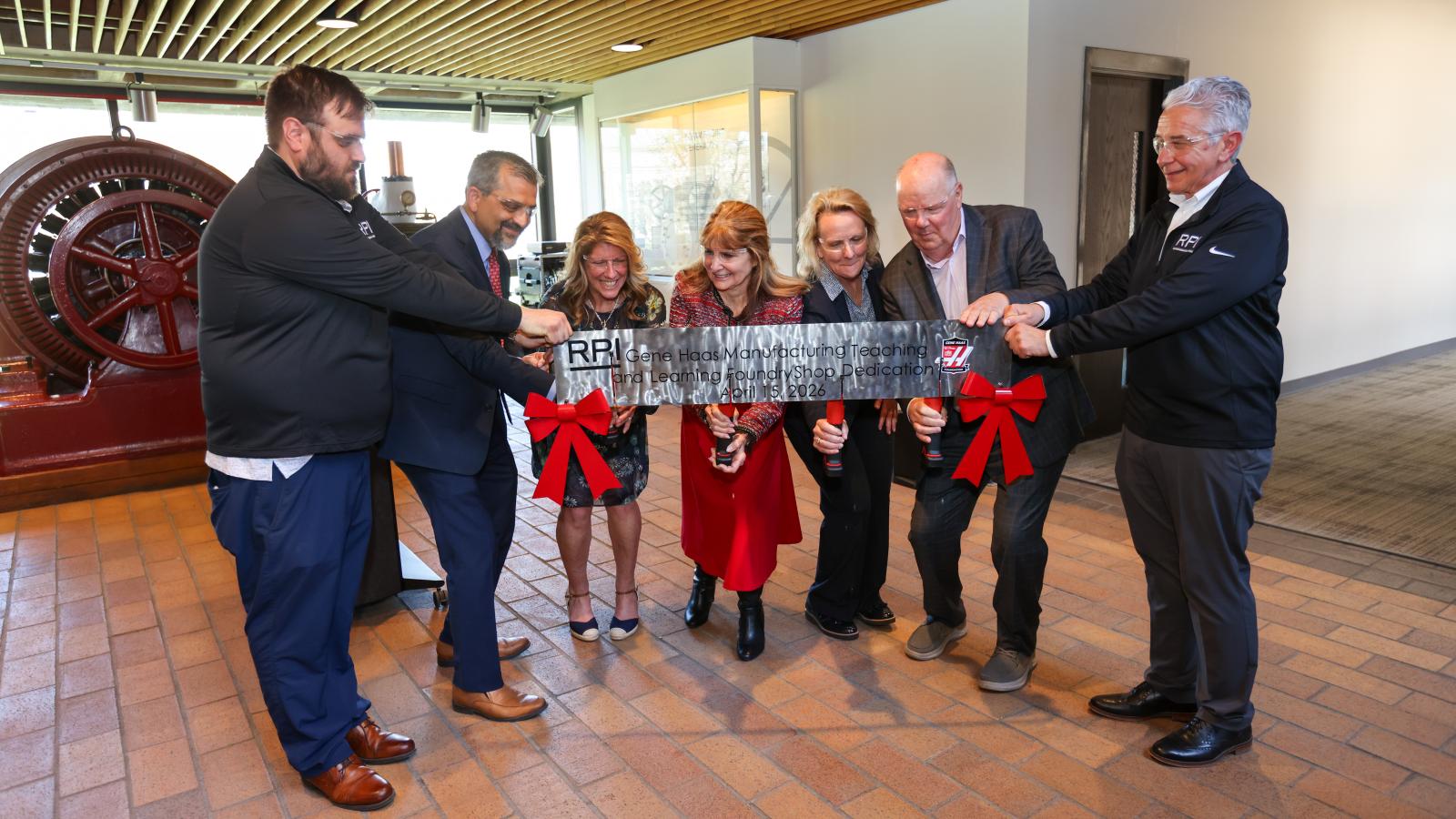
The Rensselaer Polytechnic Institute (RPI) School of Engineering recently celebrated the official opening of the Gene Haas Manufacturing Teaching & Learning Foundry with a ribbon-cutting ceremony. The event brought together representatives from the Gene Haas Foundation, the RPI community, industry partners, local educators, and community members to mark this significant investment in the future of manufacturing education and workforce development.
In a fitting tribute to the spirit of hands-on innovation, the ceremonial ribbon was crafted entirely at RPI – made from steel and cut using Snap-on nibblers. The steel ribbon was a symbol of what this facility is all about: students and faculty making things, solving real problems, and pushing manufacturing forward.
“This Foundry is a transformative step forward for our students and our programs,” said Shekhar Garde, the Thomas R. Farino, Jr. ’67 and Patricia E. Farino Dean of the School of Engineering. “By integrating cutting-edge technology with experiential learning, we are equipping our students with the skills and mindset needed to lead in today’s manufacturing landscape.”
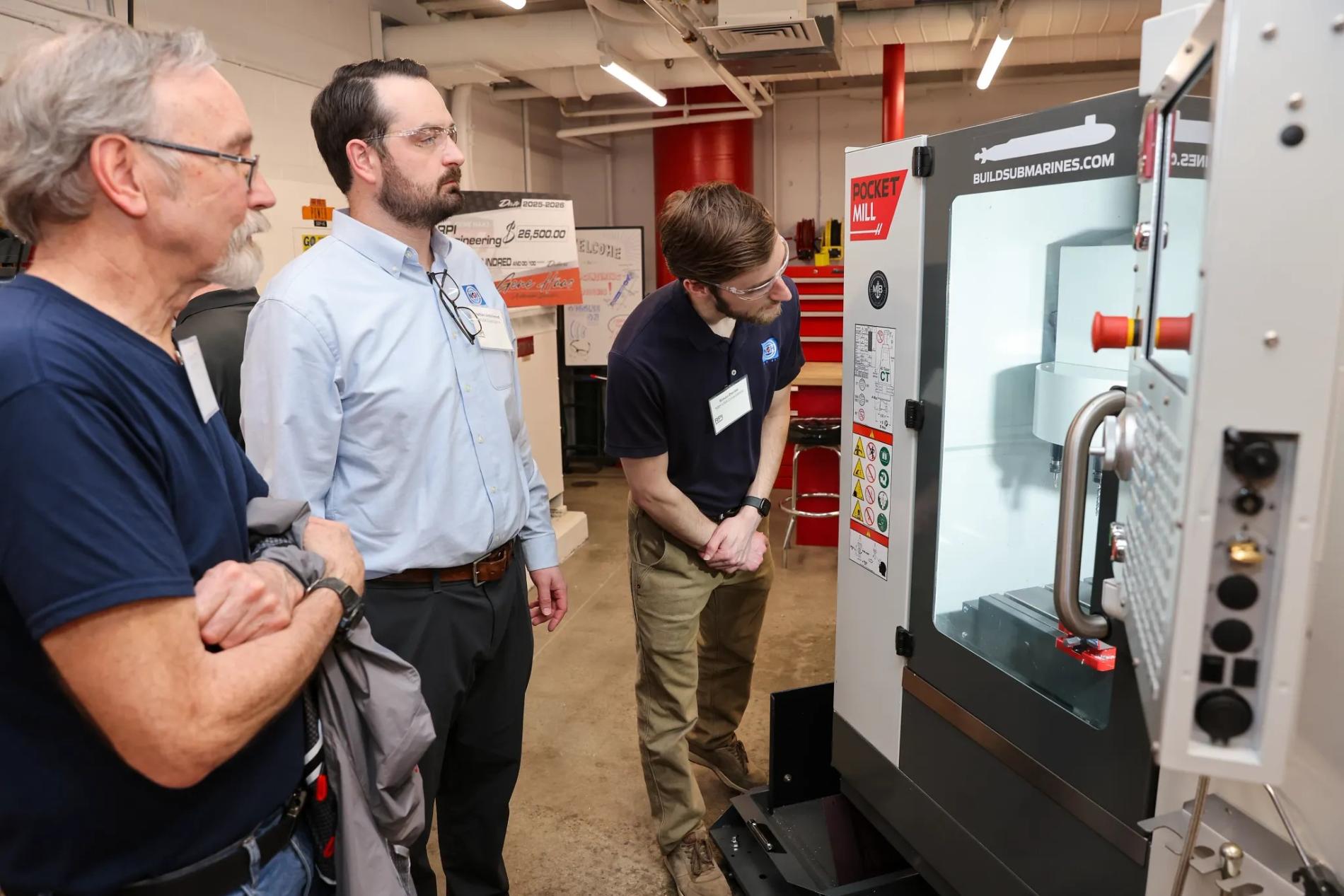
Located in the Johnson Engineering Center on campus, the newly renovated space will be open to engineering students in all years of study. Students will have access to new advanced manufacturing tools spanning robotics, artificial intelligence, and more.
The Foundry was made possible through a $500,000 grant from the Gene Haas Foundation, the project’s primary supporter. Additional support was provided by Snap-on, the Maritime Industrial Base, BlueForge Alliance, RPI alumni, and Mastercam, reflecting a broad coalition committed to advancing manufacturing education and workforce development.
“The Gene Haas Foundation believes the best way to strengthen manufacturing is to invest in the people who will shape it,” said Kathy Looman, Executive Director, Gene Haas Foundation. “RPI’s commitment to hands-on learning is what industry needs, and we’re proud to help make this facility a reality.”
As part of the celebration, the Gene Haas Foundation funded eight Manufacturing Excellence Awards of $3,000 each, presented to outstanding RPI students on the day of the event.
“At Allendale-Haas Factory Outlet, we are proud of the partnership we have built with RPI Engineering. Seeing these students recognized today reinforces the power of collaboration and partnership in manufacturing,” said Marty McGill, Vice President, Allendale-HFO. “These students are talented, driven, and ready — and this Foundry will only sharpen that edge.”
Laila Nassif ’26 and Marcus Brown ’26, two recipients of the award, reflected on the experience:
"Receiving this award reminds me why I chose to become a Biomedical Engineer,” said Nassif. “Smart manufacturing can make life better for patients, through pharmaceuticals, orthopedics, or surgical robotics. Being able to contribute to that kind of work makes this recognition especially meaningful to me."
Brown added, "Receiving this award is a tremendous honor that reinforces my commitment to a career in manufacturing innovation. This Foundry will act as an incubator, where students can hone our collaborative problem-solving skills and master advanced technical processes. With this investment in manufacturing education, I’m excited to bridge the gap between my academics and the complex, hands-on challenges that define our industry."
Troy Mayor Carmella Mantello also attended the celebration in recognition of the Foundry's significance to the region's economic future. “Manufacturing is a cornerstone of our local economy, and developing a skilled workforce is critical to keeping it strong,” said Mantello. “RPI is a special place, and programs like this help ensure that the region remains competitive and that our communities have access to good, well-paying jobs.”
Advanced manufacturing has been central to RPI's identity since its founding in 1824, and the Foundry ensures that legacy remains a differentiator for decades to come. Unlike traditional engineering programs, RPI students engage with industry-grade tools and real manufacturing challenges throughout their time at RPI — graduating with the hands-on confidence that employers in aerospace, defense, medtech, and precision industries are actively seeking. As New York State's manufacturing sector accelerates its adoption of robotics and AI-driven production, RPI is positioned to be a source of engineers trained to lead that transformation — and to make the Capital Region a destination for the companies that need them. Partnerships with institutions such as Hudson Valley Community College and Troy High School further strengthen this pipeline, connecting students from across the region to RPI’s advanced manufacturing ecosystem.
“What made this project truly exceptional was seeing the RPI community — industry partners, alumni, and the Foundation — come together around a single goal: creating the best possible manufacturing space for our students,” said Sam Chiappone, Director of Manufacturing Innovation. “That level of commitment and investment is clear — and it’s why our students will enter the workforce as engineers with a solid understanding of advanced manufacturing processes, ready to lead.”