May 5, 2026
By Rene Mai, Ph.D. student in mechanical engineering
If you talk with me long enough to hear about my background, I’m sure you will have the same question everyone always does: why did you leave patent litigation to go to graduate school as an engineer? Most people do it the other way, leaving engineering for the lucrative world of patent law.
The truth is, while I loved patent litigation and was skilled at learning and litigating complex technological patents, I was always a bit more into learning the technologies than I was litigating. I preferred spending my days working to understand technology by reading code and textbooks, or talking to professors and industry leaders, than writing briefs or preparing slides. The work of patent litigation is moored in how things were done, what technological changes were inevitable, and which ones exemplify the spark of genius required for invention. By contrast, my passion drew me into a far more speculative (and exciting) world: developing new technologies as an engineer.
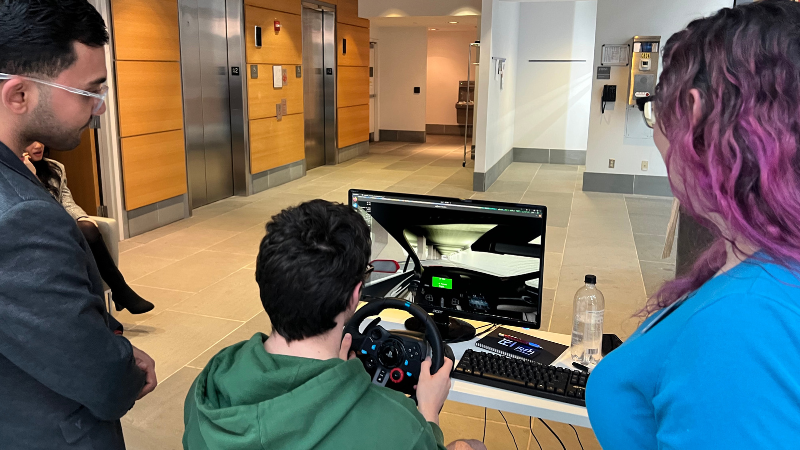
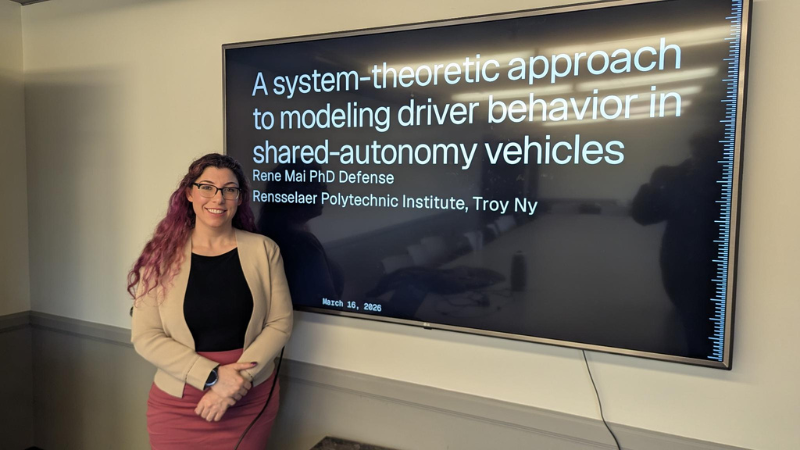
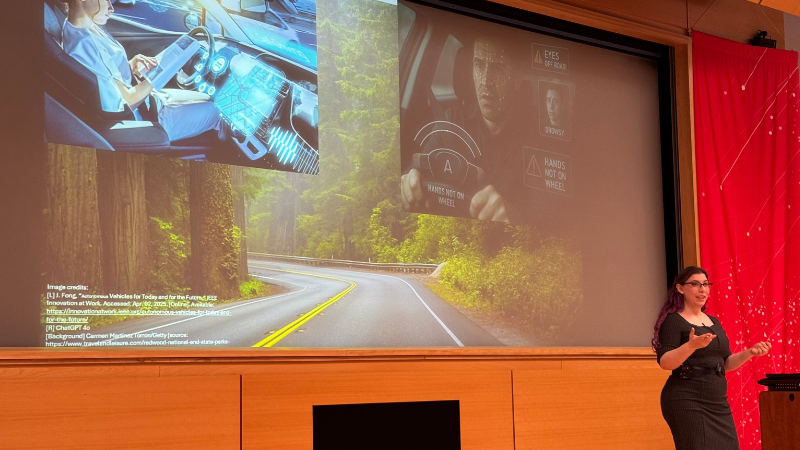
Of course, that didn’t mean I automatically decided to pursue a Ph.D. A doctoral program isn’t something to undertake lightly (something I knew firsthand from my juris doctor). Instead, I spent several months focusing on the type of technologies that were most fascinating to me, the kind that I knew I could build a new career around. That led me to the realm of shared autonomous systems, specifically high-complexity dynamical systems where humans and autonomous or robotic agents cooperate to achieve performance neither could reach on their own.
My natural inclination to mathematical and logical analysis means that I prefer to analyze these systems from a controls perspective, rather than a sociological one. The ultimate question that guides my work is “how can shared autonomous systems overcome human fallibility and technological rigidity?” If you're reading this and wondering “what field does that even fall into?” That's exactly the point. My research does not live in a single field. My work draws from traditional engineering approaches like controls, dynamics, and modeling, but also requires a deep understanding of how humans perceive the world and act upon perception. I was able to build work that is so inherently multidisciplinary because of RPI’s deep history in both controls and cognitive science (the two fields I draw upon most) and the incredible spirit of collaboration that thrives here.
I think most students believe they need to know exactly what they want to do when they start college or they risk derailing their future. In graduate school, I even started wondering if my legal career was a mistake — what was the purpose of three years of law school and six years of patent litigation if I just wanted to go back to the world most of my coworkers had left for greener pastures? It did not take long for me to realize that my legal skills were invaluable to my work as a doctoral-level researcher, from the ability to read and synthesize huge amounts of information to being comfortable explaining my work at vastly different levels of technical detail. No part of my journey was a mistake.