Program allows students to conduct their research in a unique ecosystem where medical startups are co-located with research labs
December 4, 2025
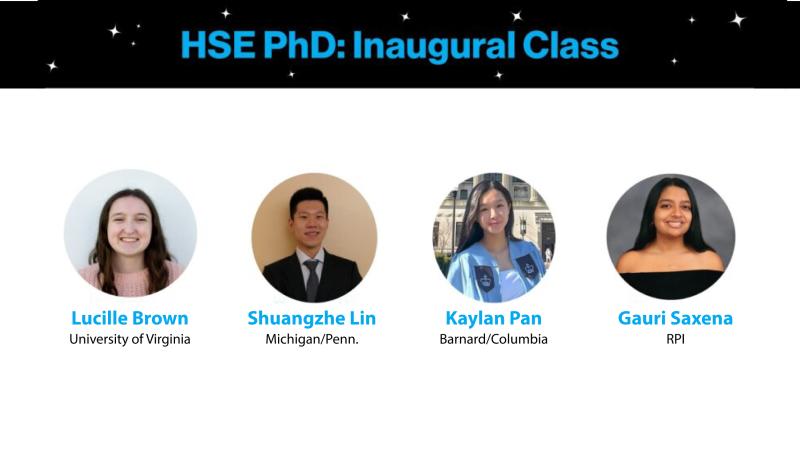
This semester, the RPI-Mt. Sinai Center for Engineering and Precision Medicine (CEPM) welcomed the inaugural cohort of students in the center’s Ph.D. program in health sciences engineering jointly offered by RPI and Icahn School of Medicine at Mount Sinai.
The program allows students to conduct their research in a unique ecosystem where medical startups are co-located with research labs. The program strongly emphasizes translational work that bridges the gap between the laboratory bench and the patient’s bedside, yielding Ph.D.s who will invent new technologies and bring them to the marketplace to address unmet clinical needs.
As the semester draws to a close, the students took a moment to reflect on the start of their coursework and the factors that drew them to CEPM’s program combining clinical medicine, engineering, and entrepreneurship in the heart of New York City.
Lucille Brown
Brown studied biomedical engineering at the University of Virginia, where her research of multiple sclerosis fueled her interest in diagnosing and treating complex diseases. She brings translational and industry exposure from a research internship at the Coulter Center for Translation and has contributed as co-author on three publications.
“I am going to be studying how we can engineer lipid nanoparticles that can cross the blood–brain barrier and explore potential genes that could be engineered into RNA therapies to treat neurodegenerative diseases," Brown said.
Brown’s coursework has included a class on the commercialization of biomedical innovation taught by Mt. Sinai’s Brian J. Nickerson, Ph.D., which explores how to effectively turn a research innovation into a marketable product that can improve patients’ lives.
Kaylan Pan
Pan pursued neuroscience and biomedical engineering at Bernard and Columbia. Her previous research focused on neuromodulation and therapeutic applications for ataxia. She brings a strong foundation in wet lab research, Python, Matlab, and modeling, and is especially interested in how engineering insights combined with clinical exposure can lead to innovative medical solutions that reduce risk for chronic diseases in women through new strategies to understand and manage menopausal transition.
"The unique environment at CEPM provides the perfect place for me to strengthen my technical foundation and build the bigger-picture skills I’ll need in the future,” she said.
Gauri Saxena
Saxena’s research background is in biomedical engineering, deep learning for Alzheimer’s disease, and neuronal cytoskeleton studies. She has co-authored a BioRxiv preprint and abstract, with a publication in progress. Her experience spans molecular studies of PRC1, advanced imaging projects at Mount Sinai, and developing software tools for brain region identification in Alzheimer’s disease research.
"I really like that CEPM's program combines engineering and medicine, and I really didn’t find that in any other Ph.D. program,” she said. “I also like that this program has clinical rotations, so I can identify unmet clinical needs of different specialties, like orthopedics and immunology.”
Saxena especially appreciates how the coursework emphasizes innovation and entrepreneurship. “Nearly every class connects scientific concepts to real-world needs in the biotech sector,” she said. “The curriculum highlights gaps in current therapies, explores how new products are developed, and encourages us to think creatively about translating research into solutions that patients and clinicians actually need.”
Shuangzhe Lin
Lin's research focuses on developing a 3D bone organoid model to study skeletal complications in diabetes and during menopause, with a goal of advancing precision drug testing and reducing reliance on animal models.
"I chose CEPM’s program because of its strong focus on interdisciplinary research and its commitment to turning scientific discoveries into practical, commercially viable solutions," Lin said. "I'm able to collaborate with clinical experts at Mt. Sinai and leverage the advanced automated facilities at the New York Stem Cell Foundation.”
“One of the most rewarding parts of my job is coming in to work and watching these students work on developing tomorrow’s clinical breakthroughs today,” said RPI Professor Deepak Vashishth, Ph.D., co-director of CEPM. “Their passion for translating discoveries into patient impact is infectious. The precision medicine platforms and therapeutic innovations emerging from their work will define the next generation of healthcare.”
CEPM is currently accepting Ph.D. program applications for the fall 2026 semester. Details are available on CEPM’s website.