February 2, 2026
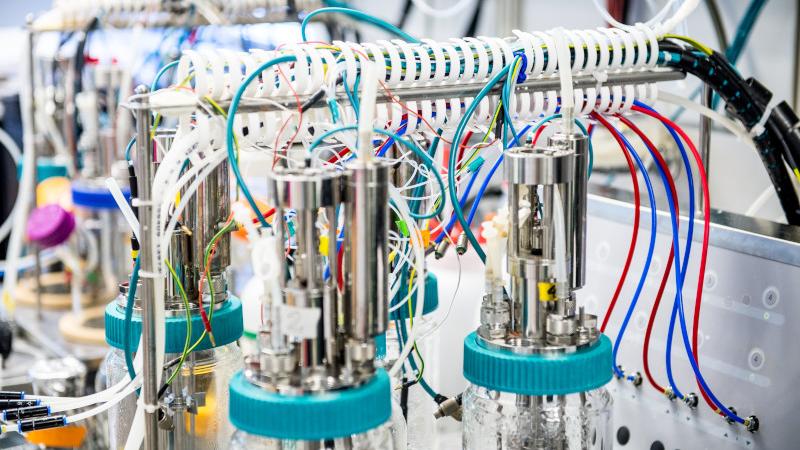
The Shirley Ann Jackson, Ph.D. Center for Biotechnology and Interdisciplinary Studies (CBIS) at Rensselaer Polytechnic Institute (RPI) was recently awarded $1 million in federal funds as part of the Congressionally Directed Spending program to advance RPI research and translational efforts related to pharmaceuticals, biopolymers, and food production.
The funds were requested by Senators Charles Schumer and Kirsten Gillibrand and further cement RPI’s status as a leader in biotechnology and biomanufacturing in the Capital Region.
"I want to thank Senators Schumer and Gillibrand for their generous support,” said Professor Juergen Hahn, Ph.D., director of CBIS. “The funding will expand our research capabilities in the biomanufacturing area and provide numerous opportunities for RPI researchers and students, and also take our collaborations with industry and local partners to a new level.”
The project will establish a biomanufacturing core facility at CBIS, open to members from multiple partner institutions, enabling research, development, workforce training, and STEM education in biomanufacturing. Funds will be used to purchase a precision fermentation system, non-contact spectroscopy equipment, genomics sequencing equipment and a flow cytometry analyzer.
The biomanufacturing sector has emerged as a critical component of national security and economic competitiveness, particularly following recent global supply chain challenges, and creates jobs in health, materials and food. This equipment will enable researchers at CBIS to develop more efficient and scalable biomanufacturing processes across multiple applications, from therapeutic protein production to human health applications.
This federal investment also positions the Capital Region as an emerging hub for biomanufacturing research and development, with potential economic benefits including job creation, technology transfer opportunities, and strengthened connections between academic research and commercial applications.
Since its opening in 2004, CBIS has made an indelible imprint on the world. CBIS researchers have developed high-tech, high-throughput methods to identify drug toxicities; they’ve devised inventive ways to synthesize the complex molecules of life; they’ve discovered how bacterial communities resist and become resistant to antibiotics; they’ve described how mistakes in protein folding occur; and they’ve advanced the methods and materials with which to grow human tissue.