September 9, 2026
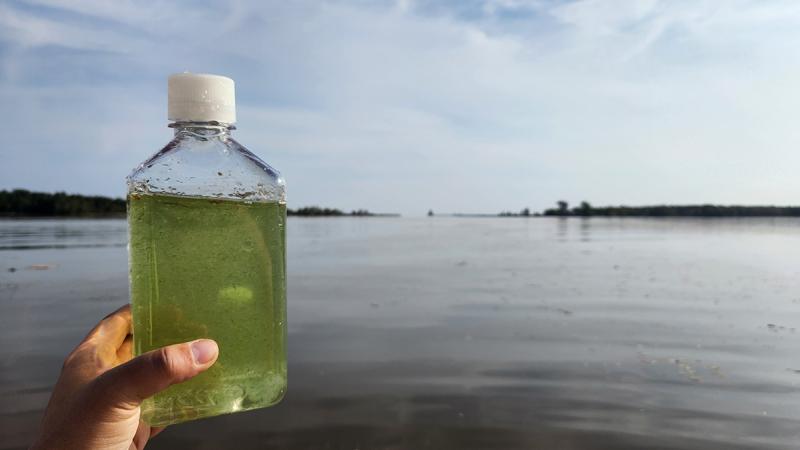
Estuaries across the United States are facing the same trends of warming water, algae growth, and declining oxygen concentrations that threaten water quality and fish populations, regardless of geographic location, according to new research led by a Rensselaer Polytechnic Institute (RPI) faculty member.
Published recently in Nature’s Communications Earth & Environment, the findings could have profound implications for water management and policy, according to the lead author, Kaitlin Reinl, Ph.D., assistant professor of Biological Sciences at RPI.
“We've had consistent problems in coastal systems with hypoxia – or low oxygen – and eutrophication, the over-accumulation of nutrients in water that leads to excessive algae growth,” Reinl explained.
Reinl led a multidisciplinary team from 14 Reserves in the National Estuarine Research Reserve System (NERRS), the National Oceanic and Atmospheric Administration (NOAA), state water management agencies, and academia, including the University of South Carolina, Mississippi State University, the Virginia Institute of Marine Science, the University of North Florida, Rutgers University, and her previous affiliation where she began this work, the University of Wisconsin-Madison. The work was supported in part by a grant from NOAA.
The team analyzed over 250 million data points collected between 2002 and 2022 from 129 locations at 29 of the 30 NERRS estuaries across the U.S., spanning multiple climate zones to identify factors contributing to the rise of eutrophication and hypoxia on a wide scale over time.
Reinl, along with collaborators, selected this research focus because of the extensive, long-term data collected by the NERRS System-wide Monitoring Program (SWMP). This dataset provides a more complete picture of ecosystem change than many other monitoring methods. For example, while satellite imagery can be a valuable tool for observing broad environmental trends, it offers a different perspective than the high‑resolution, in waterbody measurements that SWMP gives. Automated water quality sensors collect measurements every 15 minutes year-round, except during periods of ice cover, and reserve staff conduct monthly water chemistry analyses, providing researchers with an exceptionally detailed record of estuarine health and change over time.
“You get about a million data points a year minimum at each estuary, allowing us to understand change at a wide range of scales over time and space, from changes occurring over hours at a single location to studies like this one covering a large area over decades,” Reinl said.
While harmful algal blooms and other water quality challenges often draw public attention in individual waterways, Reinl and her colleagues sought to identify the large-scale environmental factors driving changes in estuarine ecosystems over time.
“We wanted to know whether we could identify the big, primary drivers of these kinds of changes on a large scale.” Reinl said.
The answer was a resounding yes. “We can say that altered nutrient concentrations are important predictors of the algal biomass, the chlorophyll, and that declining oxygen is associated with warming waters and algal biomass,” she explained.
Changing concentrations of nutrients in estuaries seem to be the main driver of chlorophyll growth across the country, creating more algal biomass that can prevent sunlight from reaching the plants below the surface that are needed by fish and other organisms. At the same time and on the continental scale, increasing water temperature and chlorophyll growth are the important contributors to the decline of oxygen concentrations that can harm fish populations, according to the paper.
Since many recreational and cultural industries rely on healthy estuaries, this knowledge may have profound effects on the economy. The researchers cited studies suggesting that coastal eutrophication costs the U.S. $100 million a year and European Union countries $1 billion annually “due to public health concerns, lost recreational opportunities and degraded commercial fisheries.”
“What we're seeing on a large scale is that things are ticking in the wrong direction,” Reinl explained.
The hope is that this study will inform future waterway management. “Now we need to start looking at individual places and finding the specific things that we can do to help support these ecosystems,” she added.