Sustainable Building Through Hemp
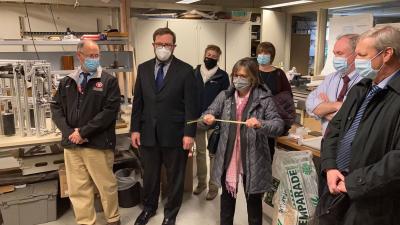
Rensselaer Polytechnic Institute brought together academia, New York state government, and industry at a recent workshop to discuss the growing hemp industry and opportunities in New York.
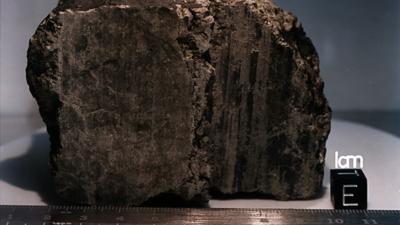
Organic molecules found in a meteorite that hurtled to Earth from Mars were synthesized during interactions between water and rocks that occurred on the Red Planet about 4 billion years ago, according to an analysis to be published this week in Science.
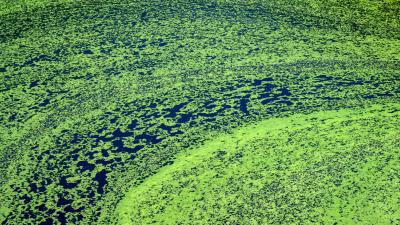
A grant from the National Science Foundation will allow Shayla Sawyer, a professor in the Department of Electrical, Computer, and Systems Engineering at Rensselaer Polytechnic Institute, and Rick Relyea, a professor of biological sciences at Rensselaer, to better understand the growing problem of harmful algal blooms (HABs).
Akila Udage, a doctoral candidate at the Lighting Research Center (LRC) in the School of Architecture at Rensselaer Polytechnic Institute, has been recognized by the U.S. Department of Energy (DOE) with an Honorable Mention in the 2022 Solid-State Lighting Workshop student poster competition for his research into the use of 3D printing to integrate electromagnetic elements into lighting systems.
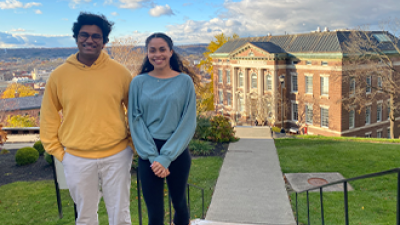
Rensselaer Polytechnic Institute (RPI) students Fiona Clarke ’23 and Aditya Sivakumar ’24 have been named University Innovation Fellows by Stanford University’s Hasso Plattner Institute of Design.
The National Institutes of Health High End Instrumentation Grant Program has awarded an equipment grant of $1,315,168 to Rensselaer Polytechnic Institute to upgrade high field 800 MHz Nuclear Magnetic Resonance (NMR) core instrumentation in the Center for Biotechnology and Interdisciplinary Studies (CBIS).
Rensselaer Polytechnic Institute is conducting an important study for the U.S. Department of Energy (DoE) on the potential for finding solutions to supply chain problems that would benefit both the public and private sectors in the Albany to New York City regional business corridor.
A predictive model of a polarized group, similar to the current U.S. Senate, demonstrates that when an outside threat – like war or a pandemic – fails to unite the group, the divide may be irreversible through democratic means.
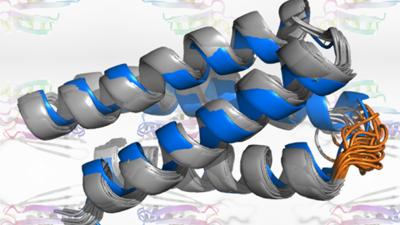
Just as convincing images of cats can be created using artificial intelligence, new proteins can now be made using similar tools.
Anirban Banerjee, MBA ’22, Brelyn Hatfield ’23, architecture, and Aida Ayuk ’22, architecture, were each selected as winners of the Paul J. and Kathleen M. Severino Center for Technological Entrepreneurship’s Change the World Challenge competition.