School of Engineering

RPI and HVCC Launch Semiconductor Workforce Development Program

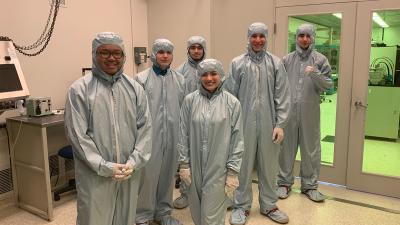
Rensselaer Polytechnic Institute and Hudson Valley Community College have welcomed the inaugural class of RPI-HVCC Semiconductor Scholars. Funded by the 2022 CHIPS and Science Act, the Scholars program is one of many efforts in the Capital Region and around the country to prepare more students to enter the semiconductor industry. 

The Scoop: RPI’s Bicentennial Ice Cream Coming to Stewart’s Shops

No birthday party is complete without ice cream.That’s why Stewart’s Shops is helping Rensselaer Polytechnic Institute kick off its bicentennial year with a new name for the store’s “Fireworks” ice cream flavor. The freshly dubbed “Quantum Freeze” will hit stores February 5, 2024. 

Rensselaer Doctoral Student Conducting Research at Los Alamos National Lab

Rensselaer Polytechnic Institute doctoral student Emily de Stefanis is one of 60 recipients of the U.S. Department of Energy (DOE) Office of Science Graduate Student Research (SCGSR) award. The SCGSR program places students with mentors at DOE national labs, where students learn from top experts in their field and conduct research in state-of-the-art facilities.De Stefanis will spend 2024 at the Los Alamos National Laboratory in New Mexico working on her research with experts in the field of nuclear materials. 

Rensselaer Polytechnic Institute Welcomes Tom Capek ’86 to Board of Trustees

Rensselaer Polytechnic Institute has announced the addition of Thomas G. Capek ’86, senior vice president and chief engineer at Corning Incorporated, to Rensselaer’s Board of Trustees. Corning is one of the world's leading innovators in materials science and has a longstanding relationship with RPI supporting research, philanthropy, and student recruitment. Capek previously served on the Dean’s Leadership Council in RPI’s School of Engineering. As a Board of Trustees member, Capek sits on the Academic Affairs and Research Committee and the Student Life Committee.

Scientists 3D-print hair follicles in lab-grown skin

A team led by scientists at Rensselaer Polytechnic Institute has 3D-printed hair follicles in human skin tissue cultured in the lab. This marks the first time researchers have used the technology to generate hair follicles, which play an important role in skin healing and function.

Back to top