Rensselaer Polytechnic Institute Students Named University Innovation Fellows
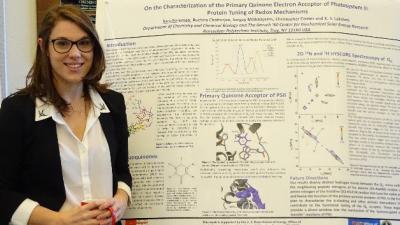
Three Rensselaer Polytechnic Institute students have been named University Innovation Fellows by the Stanford University’s Hasso Plattner Institute of Design (d.school).
Rensselaer Polytechnic Institute President Shirley Ann Jackson recently returned from the World Economic Forum’s Annual Meeting of the Global Future Councils, which took place Nov. 11-12 in Dubai. The annual meeting brought together more than 700 members of the Network of Global Future Councils to shape a better future.
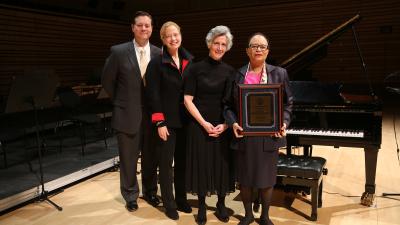
President Shirley Ann Jackson is hosting a reception for Rensselaer alumni, parents, students, and friends at Steinway Hall in New York City on Wednesday, Nov. 15, from 6:30 to 9:30 p.m. The evening will include a performance led by Mary Simoni, dean of the Rensselaer School of Humanities, Arts, and Social Sciences (HASS), and recognition of Simoni as a Steinway Artist.
A new book conceived and edited by Rensselaer Polytechnic Institute Professor June Deery examines the role of media, from television and movies to today’s digital platforms, in representing social class.
With support from a four-year $3 million grant from the National Institutes of Health, Blanca Barquera, an associate professor of biological sciences, and a team including researchers at Tufts University and Harvard Brigham and Women’s Hospital are examining evidence that Bacteroides can create energy with and without oxygen by using aerobic and anaerobic respiration, an unusual feature among many human gut bacteria.
Rensselaer Lally School Associate Professor Aparna Gupta has been invited to join the U.S. Securities and Exchange Commission as a visiting researcher.
Rensselaer Polytechnic Institute (RPI) has been recognized as having one of the top three Master of Business Analytics programs in the United States by the TFE Times.
Can environmental toxins disrupt circadian rhythms – the biological “clock” whose disturbance is linked to chronic inflammation and a host of human disorders? New research findings puts question squarely on the table.
Increasing organic runoff as a result of climate change may be reducing the penetration of pathogen-killing ultraviolet (UV) sunlight in inland lakes, rivers, and coastal waters, according to a new study in the journal Scientific Reports.
Rensselaer will host “Vanishing Point: An Evening With Elizabeth Kolbert,” on Thursday, November 2, at 7 p.m. The talk will be held in the Curtis R. Priem Experimental Media and Performing Arts Center.