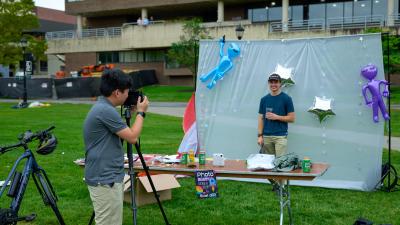
Rally Week Takes Off as a New RPI Tradition
In addition to the more than 150 students who signed up, 51 student organizations, all five of RPI’s schools, 10 campus departments, and 30 local businesses participated.
In addition to the more than 150 students who signed up, 51 student organizations, all five of RPI’s schools, 10 campus departments, and 30 local businesses participated.

RPI is advancing development of a new community childcare center in partnership with Bright Horizons following a $5 million award from the New York State Office of Children and Family Services (OCFS).

The Severino Center for Technological Entrepreneurship at Rensselaer Polytechnic Institute (RPI) has named Ajit Prabhu ’98, Co-Founder and CEO of Quest Global, as the 2026 recipient of the William F. Glaser '53 Entrepreneur of the Year Award.

On Friday, September 25, around 225 high school students from across the Capital Region participated in the 16th annual Manufacturing Day event at Rensselaer Polytechnic Institute (RPI).

Estuaries across the United States are facing the same trends of warming water, algae growth, and declining oxygen concentrations that threaten water quality and fish populations, regardless of geographic location, according to new research led by a Rensselaer Polytechnic Institute (RPI) faculty member.
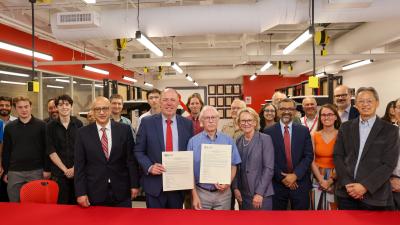
For RPI alumnus Doug Mercer ’77, helping prepare the next generation of electrical engineers to excel in the workforce has been a personal crusade for decades.

Rensselaer Polytechnic Institute (RPI) has named Daniel Potvin, Ph.D. as the Founding Director of SCALE.Rensselaer, a new business accelerator focused on scaling tough tech ventures.

Rensselaer Polytechnic Institute (RPI) researchers will contribute to two projects selected by the U.S. Department of Energy (DOE) for Phase I awards under the inaugural Genesis Mission, a national initiative designed to accelerate scientific discovery through artificial intelligence.

Researchers at Rensselaer Polytechnic Institute (RPI) have found that today's leading artificial intelligence tools for predicting protein structures routinely generate results that are physically and chemically impossible, exposing critical blind spots in how AI is being applied across scientific research.
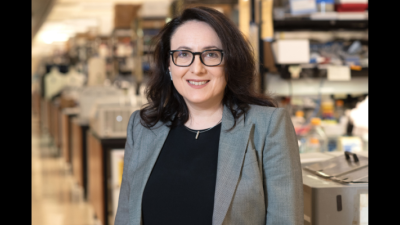
Rensselaer Polytechnic Institute (RPI) has appointed globally renowned neuroscientist Katerina Akassoglou, Ph.D., as the Tissue Engineering and Regenerative Medicine Constellation Chair in the Center for Engineering and Precision Medicine (CEPM) -- a joint initiative between RPI and Ichan School of Medicine at Mt Sinai -- effective September 1.