Applying Network Analysis to Natural History

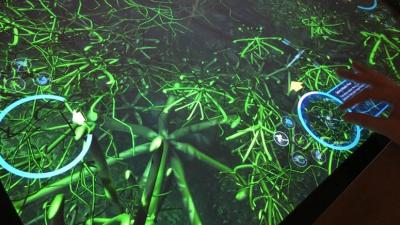
A team of researchers is using network analysis techniques – popularized through social media applications – to find patterns in Earth’s natural history, as detailed in a paper published today in the Proceedings of the National Academy of Science (PNAS).  

Better Tools for Supercomputer Research

The U.S. Department of Energy will fund research into a novel approach to improving efficiency of next-generation supercomputer simulations with an award to Rensselaer Polytechnic Institute doctoral candidate Caitlin Joann Ross.

Rensselaer Nanomaterials Expert Ganpati Ramanath Named Fellow of Materials Research Society

Nanomaterials expert Ganpati Ramanath, the John Tod Horton ’52 Professor of Materials Science and Engineering at Rensselaer Polytechnic Institute, has been named a fellow of the Materials Research Society (MRS) “for developing creative approaches to realize new nanomaterials via chemically directed nanostructure synthesis and assembly and for tailoring interfaces in electronics and energy applications using molecular nanolayers.”

Rensselaer Graduate Student Awarded Lush Prize for Work To End Animal Research in Toxicology

Carolina Motter Catarino, a graduate student in chemical and biological engineering at Rensselaer Polytechnic Institute, has been awarded £10,000 from the Lush Prize, which is a collaboration between cosmetics company Lush and research organization Ethical Consumer. As the largest prize fund for the complete replacement of animal experiments, it funds projects working to end animal research in toxicology (chemical testing).

Building Lithium-Sulfur Batteries With Paper Biomass

A major byproduct in the papermaking industry is lignosulfonate, a sulfonated carbon waste material, which is typically combusted on site, releasing CO2 into the atmosphere after sulfur has been captured for reuse. Now researchers at Rensselaer Polytechnic Institute have developed a method to use this cheap and abundant paper biomass to build a rechargeable lithium-sulfur battery. Such a battery could be used to power big data centers as well as provide a cheaper energy-storage option for microgrids and the traditional electric grid.

Back to top