
Shining Light on the Pandemic
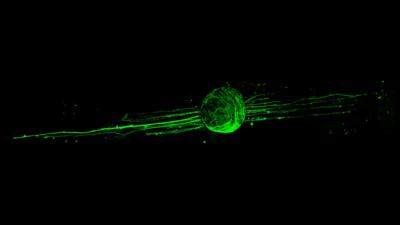
In the latest episode of Why Not Change the World? The RPI Podcast, two experts shine new light — both literally and metaphorically — on the ongoing COVID-19 pandemic.
In the latest episode of Why Not Change the World? The RPI Podcast, two experts shine new light — both literally and metaphorically — on the ongoing COVID-19 pandemic.

Outsourcing routine tasks, like payroll, customer service, and accounting, offers well-known benefits to businesses and contributes to an economy in which entrepreneurial vendors can support industry and expand employment. However, new research from the Lally School of Management at Rensselaer Polytechnic Institute discovered that not all client-vendor relationships are beneficial for the vendors.
A novel form of polymerized estrogen developed at Rensselaer Polytechnic Institute can provide neuroprotection when implanted at the site of a spinal cord injury — preventing further damage. This promising result, found in a preclinical model, was recently published in ACS Chemical Neuroscience, and it lays the groundwork for further advancement of this new biomaterial.

In research recently published in Tissue Engineering Part A, Kristen Mills, an assistant professor of mechanical engineering at Rensselaer Polytechnic Institute, and her lab sought to explore the mechanical mechanisms behind the progression of pre-cancerous ductal carcinoma in situ to invasive ductal carcinoma.

The latest episode of Why Not Change the World? The RPI Podcast features researchers who have come up with new ways of looking at — and improving — things that have been around for a long time.

Numeric anchoring is a long-established technique of marketing communication. Once a price is mentioned, that number serves as the basis for — or “anchors” — all future discussions and decisions. But new research shows that this phenomenon is not limited to decisions that involve numbers, the use and understanding of which require high-level cognitive thinking. Anchoring also biases judgments at relatively low levels of cognition when no numbers are involved.

With a prestigious National Science Foundation Faculty Early Career Development (CAREER) grant, researcher Kevin Rose will examine large-scale patterns in concentrations of carbon dioxide (CO2) and dissolved oxygen .

Future roads will likely carry autonomous vehicles that communicate with one another in a system where vehicles relay information — like destination, speed, or upcoming lane change — and then receive real-time feedback about decisions like route changes necessary to avoid traffic. Such an intelligent connected vehicle system could vastly improve mobility and safety, while reducing congestion and emissions from vehicles idling in traffic, but it will also add significant complexity to already dynamic traffic patterns, making vehicle flow vulnerable to instability.
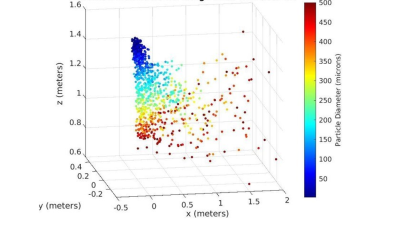
An autonomous robot capable of seeking out, capturing, and killing the virus that causes COVID-19 is being developed and built by a multi-institutional team of students and researchers from across the nation – including a group of engineers from Rensselaer Polytechnic Institute.

The 2020 Don Shohfi Memorial Outstanding Doctoral Paper Award was recently presented to Joonhyuk Bok, a doctoral student in the Lally School of Management at Rensselaer Polytechnic Institute.